Category Archives: American History

Mary Katherine Goddard 6.16.13 Thought of the Day

“He carries every point, who blends the useful with the agreeable, amusing the reader while he instructs him.”
the English translation of the Goddard family motto.

[Image courtesy: The Baltimore Sun]

[Image courtesy: The Baltimore Sun]

Mary Katherine Goddard was born on this day n Groton, Connecticut, USA, in 1738. Today is the 275th anniversary of her birth.

She was elder of two children born to Sarah Updike Goddard and Dr. Giles Goddard. Mary Katherine and her brother William learned to read and write at their New London, Connecticut home. Their mother also taught them “Latin, French, and the literary classics.” [WHMN.org] Shakespeare, Pope and Swift  were favorite reading assignments.

When Mary Katherine was 19 her father passed away. The family stayed in Connecticut for a few years while William was apprenticed to a local printer, but in 1762 they moved to Providence, Rhode Island, and  Sarah Goddard lent William the money to start his own printing business. All three members of the family pitched in to help establish the business.

William was ostensibly in charge, (but) he traveled a great deal, and it was Sarah Updike Goddard who was the true publisher of the Providence Gazette and Country Journal.  Mary Katherine took a great interest in the business and forewent many of the usual activities for young ladies to work as a typesetter, printer, and journalist.  The mother/daughter team made their print shop a hub of activity at a time when newspapers exerted great political influence.  They added a bookbindery, and in addition to the Gazette, printed almanacs, pamphlets, and occasionally books.[WHMN.org]

In 1765 William left Rhode Island for the more metropolitan Philadelphia.  Mary Katherine took over the printing operation in Providence.

…Left with a burden upon her shoulders, Mary Katherine acquired the skills she needed to print a successful publication. “It was probably during the years of [William’s] absence… that his sister… learned the practical side of typography and journalism… ” Lawrence C. Wroth wrote.[University of Rhode Island web site URI.edu]

Three years later William asked the two women to sell the Providence business (They sold the Gazette,  press and building for $550) and move to Pennsylvania to help him with the Philadelphia Chronicle.
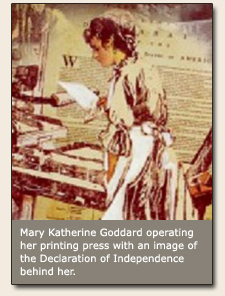
Upon their arrival they ran the newspaper and press and William headed to Baltimore, Maryland  on a new venture.  Mary Katherine followed him again in 1774 when she took over her brother’s weekly publications the Maryland Journal and Baltimore Advertiser as he continued to travel.

With her mother dead and her brother prioritizing his political inclinations, Mary Katherine Goddard finally assumed the title of publisher of the Maryland Journal and the Baltimore Advertiser.  She put “Published by M.K. Goddard” on the masthead on May 10, 1775 — and it remained there even when William returned from his New Hampshire-to-Georgia travels in 1776.  [WHMN.org]

She also became a postmaster in 1775 — the first woman in the colonies to do so. As postmaster she was at the  “center of the information exchange.”  [Ibid] and was privy to the news before her competitors. The Journal broke important news stories  (like the skirmishes at Lexington and Concord).

[Image courtesy the Library of Congress]

[Image courtesy the Library of Congress]

Mary Katherine kept the tone of the Journal professional. Other newspapers — and William — editorialized and included op eds that advanced political agendas. “Mary Katherine Goddard used a more objective, impersonal, and professional tone.” [Ibid]

She was a shrewd business woman who accepted alternate forms of payment when the taxes or the War made cash subscription payments difficult.

These included beef, pork, animal food, butter, hog’s lard, tallow, beeswax, flour, wheat, rye, Indian corn, beans and other goods she could sell in her shop. [University of Rhode Island web site URI.edu]

She ran a stationary and printing press where fine printing was produced. She also had a local paper mill.

Mary Katherine biggest scoop as a newspaper woman came in January of 1777 when her press printed the first official copy of the Declaration of  Independence to include the names of the signers.

Goddard's published copy of the Declaration of Independence with all the signers identified. [Image courtesy McHenry Country Turning Point.org]

Goddard’s published copy of the Declaration of Independence with all the signers identified. [Image courtesy McHenry Country Turning Point.org]

She successfully ran both the publication and the related printing and paper companies AND served as postmaster through out the long Revolutionary War. But things changed in 1784. She had a falling out with William and he forced her off the paper’s staff. Then in 1789 Mary Katherine was forced to give up her postmaster position. As a woman — it was as argued — she could not handle the traveling the job would demand. Her appeals — backed by a petition of endorsement signed by over 200 Baltimore businessmen — went to President Washington and Congress but got nowhere. She resigned her self to running her bookstore.

Mary Katherine Goddard died att he age of 78 on April 12, 1816. “A copy of the Declaration of Independence printed by her is at the Maryland Hall of Records.”[WHMN.org]


Harry S. Truman 5.8.13 Thought of the Day

“If you can’t convince them, confuse them.”” Harry Truman

Harry S. Truman (1884 – 1972), 1945 – 1953 the...

Harry S. Truman (1884 – 1972), 1945 – 1953 the thirty-third President of the United States Deutsch: Harry S. Truman (1884–1972), 1945 bis 1953 33. Präsident der Vereinigten Staaten (Photo credit: Wikipedia)

Harry S. Truman was born on this day in Lamar, Missouri, in 1884. today is the 129th anniversary of his birth.

He was the eldest of three children born to John Anderson Truman and Martha Ellen Young Truman. Father was a farmer and his family was of modest means. The family moved to Independence Missouri when Harry was six.

When he was eight he began his formal schooling. He liked music and took piano lessons. He also loved to read and enjoyed history. Truman was always interested in politics, and was a page for the Democratic National Convention in 1900. He graduated from Independence High School in 1901.

The Trumans didn’t have the money to send their children to College — Harry Truman is the only US President in the 20th Century with out a college degree — so Harry worked after graduating from high school.

“He worked a variety of jobs after high school, first as a timekeeper for a railroad construction company, and then as a clerk and a bookkeeper at two separate banks in Kansas City. After five years, he returned to farming and joined the National Guard.” [Biography.com]

In 1905 he joined the Missouri Army National Guard. He served in the Guard until 1911. After a few years break he rejoined the Guard to fight in World War One. He served as an Captain in the 129th Field Artillery.

At the end of the War Truman came home to Independence, and married Elizabeth (Bess) Virginia Wallace and opened a haberdashery with his fellow soldier, Edward Jacobson. Although the clothing shop failed his relationship with Jacobson lasted for decades.

“Active in the Democratic Party, Truman was elected a judge of the Jackson County Court (an administrative position) in 1922. He became a Senator in 1934. During World War II he headed the Senate war investigating committee, checking into waste and corruption and saving perhaps as much as 15 billion dollars.” [White House.org]

Franklin Roosevelt choose Truman as his running mate in 1944. Truman served as Vice President less than 12 weeks before Roosevelt died of a massive stroke. Roosevelt had kept him largely in the dark. He didn’t even know about the Manhattan Project.

Presidential portrait of Harry Truman. Officia...

Presidential portrait of Harry Truman. Official Presidential Portrait painted by Greta Kempton. (Photo credit: Wikipedia)

He said when he assumed office “I felt like the moon, the stars and all the planets had fallen on me.”

While the war in Europe was winding down — he proclaimed “V-E Day” on his 61st birthday — there seemed no end in sight with the war with Japan.

“An urgent plea to Japan to surrender was rejected. Truman… ordered atomic bombs dropped on cities devoted to war work. Two were Hiroshima and Nagasaki. Japanese surrender quickly followed.” [White House.org]

Post war accomplishments included:

  • Witnessing the signing of the charter of the United Nations
  • Expanding the Social Security system (the Fair Deal),
  • The Truman Doctrine  (aimed at thwarting Soviet aggression)
  • The Marshall Plan (helping to rebuild the European economy)
  • The Berlin Airlift
  • NATO
  • Recognition of Israel
  • Integration of the Armed Forces

Challenges included:

  • Demobilizing the military while maintaining a healthy economy
  • The cold War
  • Labor disputes, especially with the Steel industry
  • Korean War
  • McCarthyism

Truman survived an assassination attempt on November 1, 1950. The first family was staying in Blair House — the White House was undergoing major renovations — when two Puerto Rican nationals attempted to enter the house and shoot him. There was gun battle outside Blair House, resulting in the death of a White House police man and one of the conspirators.

In 1952 he decided not to run for a second term (He has served most of Roosevelt’s’ final term and one full term of his own.) He supported Democrat Adlai Stevenson against Dwight Eisenhower.

He wrote his memoirs back in Independence. He worked to establish a presidential library. He toured the country with Bess in his Chrysler New Yorker.

Harry Truman died at the age of 88 the day after Christmas, 1972.

“My choice early in life was either to be a piano-player in a whorehouse or a politician. And to tell the truth, there’s hardly any difference.”

English: US Postage stamp: Harry. S. Truman, I...

English: US Postage stamp: Harry. S. Truman, Issue of 1973, 8c (Photo credit: Wikipedia)


James Monroe 4.28.13 Thought of the Day

“The best form of government is that which is most likely to prevent the greatest sum of evil.”–James Monroe

James Madison, Hamilton's major collaborator, ...

James Madison, Hamilton’s major collaborator, later President of the United States and “Father of the Constitution” (Photo credit: Wikipedia)

James Monroe was born on this day in Westmoreland County, Virginia, USA in 1758. Today is the 258th anniversary of his birth.
Monroe’s was born to Spence and Elizabeth Monroe a moderately well to do couple of Scottish, Welsh and French Huguenot descent. His father was a planter and carpenter. Elizabeth tutored her children at home, and James didn’t start school until he was 11, when he went to “Campbelltown Academy between 1769 and 1774,” [Biography.com]

In 1774 his father died and Monroe inherited the family’s plantation and slaves.  His mother passed soon after. James and his brothers  be came ward of uncle.  the same  year he entered the College of William and Mary. William and Mary is in Williamsburg, Virginia, which was then the capital of the colony of the State. It was quiet an interesting time to be studying in the city. The Royal Governor  and his family had fled the city, the arsenal and Governor’s Palace had been looted and ‘revolution’ was in the air. Monroe was part of a group of men who raided the Governor’s Palace and liberated its cash of weapons. They used the weapons to form the Williamsburg Militia.

In Winter of 1776 he left school and volunteered with the Continental Army.  He was shot in the shoulder at the Battle of Trenton, New Jersey.  And he fought with distinction throughout the war.

He met Thomas Jefferson during the war, and Monroe studied law under the Virginia statesman when the Revolution drew to a close. After passing the bar he was quickly elected to the Virginia Assembly  (probably through Jefferson’s influence.)

Elected to the Continental Congress in 1783, Monroe worked for expanding the power of Congress, organizing government for the western country, and protecting American navigation on the Mississippi River. [Mille Center.org]

He was initially opposed to the ratification of the Constitution and fought to have senators and the President directly elected. He also fought for the inclusion of a Bill of Rights.

As a youthful politician, he joined the anti-Federalists in the Virginia Convention which ratified the Constitution, and in 1790, an advocate of Jeffersonian policies, was elected United States Senator. [Whitehouse.gov]

He lost the 1790 race for the US House of Representatives to James Madison, but “was quickly elected by the Virginia legislature as a United States senator.” [Biography.com] Jefferson, Madision and Monroe joined forces to oppose Federalist policies of Vice President John Adams and Secretary of Treasury Alexander Hamilton.

James Monroe, fifth President of the United States

James Monroe, fifth President of the United States (Photo credit: Wikipedia)

Monroe served as Minister to France from 1794-1796 and he helped negotiate the Louisiana Purchase.

In 1816 he ran for  president with the blessing of his friend and  outgoing POTUS Madison. He won, becoming the 5th president of the United States. (4 of the first 5 US presidents were from Virginia, Monroe is the last of the “Virginia Dynasty”.)

His term started with a honeymoon dubbed the “Era of Good Feelings.” However, Economic depression and slavery disputes meant that the honeymoon didn’t last long.

The Monroe Doctorine is his legacy in foreign affairs. Foreign powers  must leave the American continents alone and “henceforth not to be considered as subjects for future colonization by any European Power.”[Whitehouse.gov]

During his presidence five states were admitted to the Union: Mississippi (1817), Illinois (1818), Alabama (1819), Main (1820), and Missouri (1821).

Monroe died on the Fourth of July, 1831.

James Monroe County (New York)


James Buchanan

“What is right and what is practicable are two different things.”– James Buchanan

English: I took photo of James Buchanan in Nat...
English: I took photo of James Buchanan in National Portrait Gallery with Canon camera. Public domain. (Photo credit: Wikipedia)

James Buchanan was born on this day in Cove Gap, Pennsylvania, USA in 1791. Today is the 222nd anniversary of his birth.

James Buchanan Log House

Although he was born in a log cabin Buchanan’s family was well to do. His father was a prosperous businessman. His father, James Buchanan, Sr. was a farmer, businessman and merchant, his mother, Elizabeth Speer, was intelligent and well-respected. James was the second of 11 children, 8 of whom lived to adulthood.

Young James attended school in the Mercersberg area, but his father’s business triumphs and his mother’s interest in education dictated better opportunities for the boy. At age sixteen, he entered Dickinson College in Carlisle, seventy miles from home. [the Miller Center.org]

After graduation in 1809 he went to Lancaster, PA, to study Law. He passed the bar in 1812.

Although he was against the War of 1812 (he thought it was unnecessary) He joined the light dragoon unit when the British invaded Maryland and helped defend the city of Baltimore. Although the Battle of Baltimore would later become famous because of Francis Scott Key’s poem The Star Spangled Banner, Buchanan’s unit didn’t see any action.

He returned to Lancaster after the war. At 23 he ran for Pennsylvania House of Representatives and won a seat as a Federalist.

Toward the end of his time in the legislature, Buchanan fell in love with Ann Caroline Coleman. … The young woman’s family opposed the match with Buchanan, however. … Ann Coleman sent him a letter breaking off the engagement. A few days later she died. The Coleman family turned its grief and guilt on the young lawyer and forbade him to attend the funeral. The experience severely shook Buchanan; he vowed he would not marry another, and he never became seriously involved with any other woman for the rest of his life, though he carried on many flirtations. He would be the nation’s first and only bachelor President. [the Miller Center.org]

He threw himself into his work and was elected to the U.S. House of Representatives in 1820.

He was elected five times to the House of Representatives; then, after an interlude as Minister to Russia, served for a decade in the Senate. He became Polk’s Secretary of State and Pierce’s Minister to Great Britain. [White House.gov]

Being out of the country during a contentious primary season helped Buchanan side step the bloody Slavery debate. “The overseas post enabled Buchanan to be unblemished by the political bloodshed that resulted from the disastrous Kansas-Nebraska Act of 1854.” [the Miller Center.org]  He became the Democratic Party’s nominee for President in 1856. He beat Republican John C. Frémont and took the White House on March 4, 1857 as the 15th president of the United States.

James Buchanan: Fifteenth President of the Uni...
James Buchanan: Fifteenth President of the United States (Photo credit: Wikipedia)

The first crisis of his presidency happened when the Supreme Court handed down the Dread Scott Decision…

Asserting that Congress had no constitutional power to deprive persons of their property rights in slaves in the territories. Southerners were delighted, but the decision created a furor in the North. [White House.gov]

More slavery woes were in store in the territory of Kansas. The choice in Bleeding Kansas was between two rival state constitutions, the Free-Soil (anti-slavery settlers) took Topeka as their capital, those who were pro-slavery picked Lecompton as the seat of government. The Free-Soil party was in the majority but the Lecomptons managed (through a number of shady means) to get their platform passed.

Buchanan decided to end the troubles in Kansas by urging the admission of the territory as a slave state. Although he directed his Presidential authority to this goal, he further angered the Republicans and alienated members of his own party. Kansas remained a territory. [Ibid]

By the mid-term elections Buchanan’s political star had fallen and the Republican took the House and Senate. He was the lamest of lame ducks and the government was at a stalemate. In the presidential election of 1860 the Democrats split with Buchanan taking the Southern states and Douglas taking the Northern states.

Consequently, when the Republicans nominated Abraham Lincoln, it was a foregone conclusion that he would be elected even though his name appeared on no southern ballot. Rather than accept a Republican administration, the southern “fire-eaters” advocated secession…President Buchanan, dismayed and hesitant, denied the legal right of states to secede but held that the Federal Government legally could not prevent them. He hoped for compromise, but secessionist leaders did not want compromise. [White House.gov]

South Carolina was first to secede (on December 20, 1860.) Six other states joined South Carolina and formed the Confederate States of America. “When Buchanan left office on March 3, 1861, to retire to his estate outside of Lancaster, Pennsylvania, he left the nation on the brink of civil war.” [Biography.com ]

James Buchanan
James Buchanan (Photo credit: Wikipedia)

He lived out the war at his home, Wheatland, in Lancaster, PA.

Rightly or wrongly, considerable blame for the Civil War fell upon him. His portrait had to be removed from the Capitol to keep vandals from damaging it, and posters captioned “Judas” depicted him with his neck in a hangman’s noose. A wave of second-guessing condemned Buchanan’s actions with regard to Fort Sumter. The Republican press attacked him while absolving the Republican Party and Lincoln from all responsibility for the conflict. Although Buchanan vocally supported the Union cause, many branded him an appeaser of the South and a lover of slavery.  [the Miller Center.org]

He died of respiratory failure in 1868. He 77.


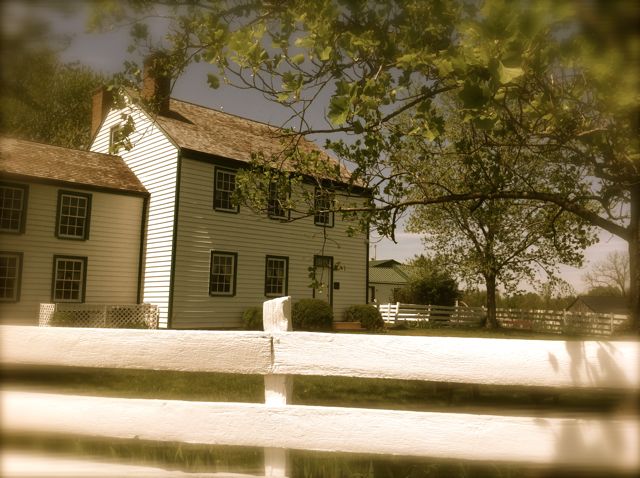
The Samuel Mudd House

Home of Dr Samuel Mudd

Home of Dr Samuel Mudd (Photo credit: crazysanman.history)

A trip to Southern Maryland brought us to the door step of history today when we stopped by the Samuel Mudd House. You may remember that I profiled Mudd as a Thought of the Day bioBLOG on his birthday back in December (click HERE to read the bio) so when we saw the brown historical marker indicating that Mudd’s house was a few mile off Maryland’s Route 5 we had to make a side trip and explore.

Approaching the Mudd House.

Approaching the Mudd House.

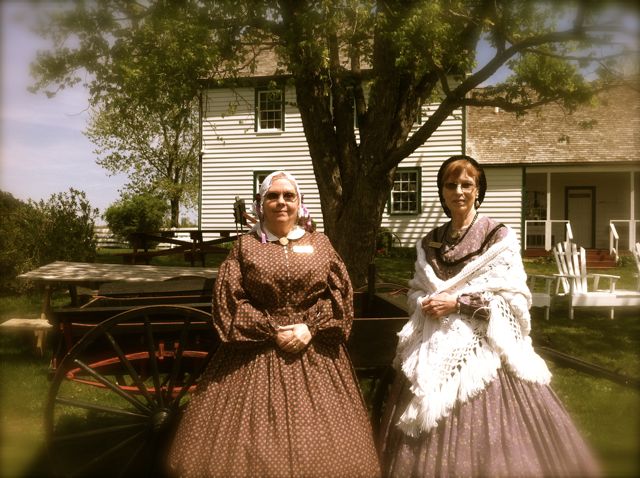
You enter the Dr. Samuel Mudd House at the back of the house, at the gift shop. There a docent will greet you and take you on a tour of the house. Our docent, Russet Hodgkins, took us through the events of early April 16th when…

Docents Russet Hodgkins and Lynn Bounviri pose behind the Mudd House.

Docents Russet Hodgkins and Lynn Bounviri pose behind the Mudd House.

A knock at the door work the 31-year-old doctor and his wife “Frankie”  at 4:00 am.

Two men stood in the doorway, one in need of medical attention for a badly broken leg. It was David Herold and John Wilkes Booth. News of the previous night’s assassination had not reached sleepy Charles Country.  Mudd couldn’t have known that Booth had shot Lincoln. The doctor didn’t even recognize the men, who were traveling under aliases — though there was something familiar about the injured man. He had actually met Booth before (when the actor was looking to buy a horse and property in the area) but that night he was in disguise, and the poor light and a false beard fooled the doctor.

English: Broadside advertising reward for capt...

English: Broadside advertising reward for capture of Lincoln assassination conspirators, illustrated with photographic prints of John H. Surratt, John Wilkes Booth, and David E. Herold. Français : Avis de recherche avec prime de 100.000 $ pour la capture de John Wilkes Booth, le meurtrier du président Abraham Lincoln, et deux de ses complices, David Edgar Herold et John Harrison Surratt. (Photo credit: Wikipedia)

He examined the stranger’s leg on a red couch that still sits in the House’s parlor, and had him taken upstairs where he set the leg.  The next day the two men acted suspiciously, turning their faces to the wall when Mudd’s wife brought them food.  After a few hours rest they left, headed toward Virginia where they were eventually found at the Garrett Farm.

Investigators followed Booth’s trail to Mudd’s house and the doctor was implicated in the Lincoln assignation.Mudd was convicted by a Military Commission and sentenced to life in prison. He was sent to the military prison at the Dry Tortugas, west of Key West, Florida. When a yellow fever outbreak hit the Dry Tortugas and the  prison doctor died of the disease Mudd took over. For his efforts during the epidemic President Andrew Johnson pardoned him.

Dr. Mudd as he appeared when working in the ca...

Dr. Mudd as he appeared when working in the carpenter’s shop in the prison at Fort Jefferson. (Photo credit: Wikipedia)

He went back to his wife and children and the Maryland farm. Mudd died of pneumonia in 1883.  He was 49 years old.

The house is decorated with furniture from several generations of Mudds, and it is interesting to see how this working farm passed down from generation to generation.

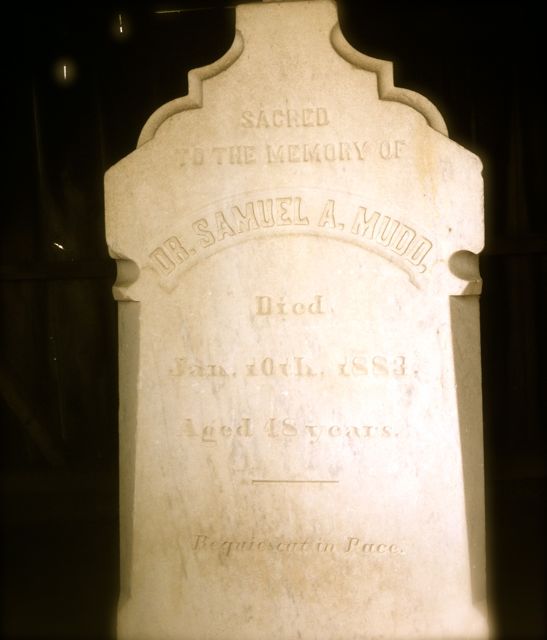
The mistake tombstone

The mistake tombstone

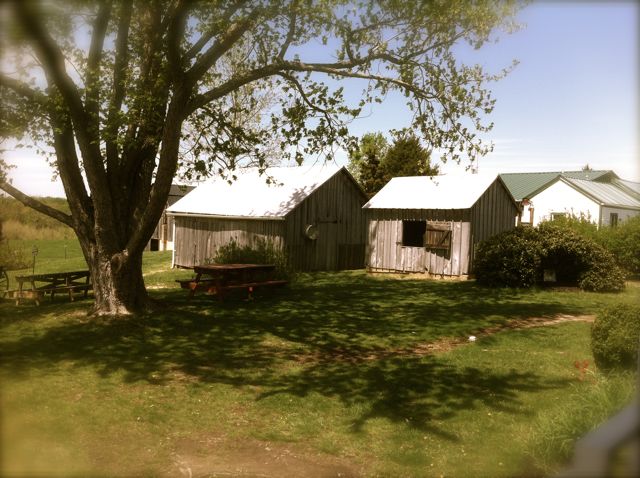
Don’t miss the outbuildings, especially the gravestone building (they made a mistake on his grave marker, and this “mistake” is housed at the museum.) Other outbuildings house period farm equipment, a tobacco barn, a Civil War display and more.

Outbuildings and barns to explore at the Mudd House

Outbuildings and barns to explore at the Mudd House

Dr.  Samuel A. Mudd House is a privately run museum and is open March to November on Wednesdays and Saturdays from 11 to 4  and Sundays 12 to 3:30. (Closed on Easter.) The museum is also open the first weekend in December for a Victorian Christmas.

Call 1-301-274-9358 for more information.


Dorothea Dix 4.4.13 Thought of the Day

“In a world where there is so much to be done, I felt strongly impressed that there must be something for me to do” — Dorothea Dix

Ninth plate daguerreotype of Dorothea Lynde Dix.

Ninth plate daguerreotype of Dorothea Lynde Dix. (Photo credit: Wikipedia)

Dorothea Lynde Dix was born on this day in Hampden, Maine, USA in 1802. Today is  211th anniversary of her birth.

She was the oldest child of Joseph and Mary Dix. Joseph was an itinerant Methodist preacher and sometime laborer. He was also an alcoholic and an abusive father. “Her mother was not in good mental health” [Webster.edu] so by the time her two brothers, Joseph and Charles, were born Dorothea was taking care of the house. She also cared for her brothers.

During the war of 1812 the British took control of Hampden and the family moved Vermont. She also spent much of her early life in Worcester, Massachusetts. Her father taught her to read and write when she was little, “when she entered school she was way ahead of everyone else. This developed a passion for reading and teaching, as she taught her brothers how to read as well” [Ibid]

When she was about 12 it was decided that her parents could not care for the children (her mother was suffering from severe, incapacitating headaches and her father’s alcoholism was spiraling out of control) so the Dorothea, Joseph and Charles went to live with their Grandmother Dix in Boston. Madame Dix was a wealthy woman and life in the Dix Mansion was far cry from the poverty at home. But her grandmother had a very narrow vision of what well brought up young ladies did and did not do. They DID take dancing lessons and wear fine clothing. They DID NOT give food and clothing to children begging at the front gate. When Dorothea was 14 Madame Dix asked her sister, Dorothea’s great-aunt, Mrs. Duncan, to take in the girl and teach her how to be a proper young lady. That relationship fared better, but Dorothea did everything she could to get back to her brothers.

Dorothea wanted to be a teacher and with the help of an older cousin, Edward Bangs, she opened a Dame School for young ladies. “In the fall of 1816, at age fifteen, she faced her first twenty pupils between the ages of six and eight. She ran this school of sorts for three years.” [Ibid]

She continued teaching and began a formal school for older children in a cottage on her grandmother´s property. The school was named “the Hope” and it served the poor children of Boston whose parents could not afford a formal education. At this time, Dorothea wrote her first book, Conversations on Common Things. This encyclopedia for children was quite popular and sold many copies.[Learning to Give.org]

Dorothea Dix

Dorothea Dix (Photo credit: elycefeliz)

in 1826 she had to close the school because of health problems. It took her several years to recover, during this time she “wrote four more books including Hymns for Children and American Moral Tales for Young Persons.” [Ibid] Although she took on a governess job and later returned to teaching her bouts with illness recurred. She had tuberculosis, and had to eventually give up teaching. On advice from her doctors she took a long trip to England to recuperate. There she stayed with the Rathbone family. The Rathbones were Quakers and social reformers.

While in England she toured the York Retreat insane asylum. It was built by William Tuke in 1796 as was a state of the art facility for the mentally ill.

The idea that full recovery could be made if the mentally ill were treated and cared for compassionately was a principle Dix never forgot and brought to every aspect of her work. [Ibid]

When she came back to the U.S. she was asked to teach Sunday school at the East Cambridge Jail.

She discovered the appalling treatment of the prisoners, particularly those with mental illnesses, whose living quarters had no heat. She immediately went to court and secured an order to provide heat for the prisoners, along with other improvements. [Biography.com]

She embarked on a 2 year fact-finding mission, touring every facility for the mentally ill in the state. The appalling conditions she found at East Cambridge Women’s Jail (no heat, no light, scant clothing, no furniture, scarce sanitation…) was the rule rather than the exception. Much to the chagrin of those running the facilities “she compiled a detailed report and submitted it to the legislature in January 1843.” .[Learning to Give.org] A bill to remedy the abuses was quickly passed.

U.S. Library of Congress DIX, DOROTHEA LYNDE. ...

U.S. Library of Congress DIX, DOROTHEA LYNDE. Retouched photograph. date found on item. Location: Biographical File Reproduction Number: LC-USZ62-9797 (Photo credit: Wikipedia)

Dorothea set her sights on neighboring states and soon had New York and Rhode Island reforms underway. New Jersey, Pennsylvania, Alabama, Louisiana, Georgia, South Carolina, Mississippi and Arkansas were next.

In 1848, Dix submitted a bill to Congress that called for five million acres to be set aside for the use of building mental institutions to care for the ill. … For the next three years, the bill was passed back and forth. Finally, in 1854, it passed both the Senate and House, but President Franklin Pierce vetoed the bill. President Millard Fillmore was a supporter of Dorothea Dix and, in 1852, signed an executive order to begin construction of a hospital that would benefit Army and Navy veterans . [Ibid]

When the Civil War broke out..

“she volunteered her services and was named superintendent of nurses. She was responsible for setting up field hospitals and first-aid stations, recruiting nurses, managing supplies and setting up training programs” [Biography.com]

As her health continued to deteriorate she entered the state hospital in Trenton, New Jersey, a hospital she help establish. She spent 6  year there before passing away on July 17, 1887.

In all she played a major role in founding 32 mental hospitals, 15 schools for the feeble-minded, a school for the blind, and numerous training facilities for nurses. Her efforts were an indirect inspiration for the building of many additional institutions for the mentally ill. She was also instrumental in establishing libraries in prisons, mental hospitals and other institutions. [Webster.edu]

the Fountain for thirsty horses that Dorothea ...

the Fountain for thirsty horses that Dorothea Dix gave to the city of Boston to honor the Massachusetts Society for the Prevention of Cruelty to Animals, located at the intersection of Milk and India Streets. (Photo credit: Wikipedia)


John Tyler 3.29.13 Thought of the Day

“Popularity, I have always thought, may aptly be compared to a coquette – the more you woo her, the more apt is she to elude your embrace.”–John Tyler


English: A portrait of John Tyler located insi...

English: A portrait of John Tyler located inside the National Portrait Gallery in Washington, D.C. (Photo credit: Wikipedia)


John Tyler was born on this day near Charles City County, Virginia, USA in 1790. Today is the 223rd anniversary of his birth.


Born to a wealthy family on his father’s Greenway plantation. His family had been members of Virginia’s elite since the 17th century. His father, John Tyler, Sr. was a judge who was friends with Thomas Jefferson, served in the Virginia House of Delegates, was Speaker for that House, and was the 15th Governor of Virginia (when John junior was 18.) His mother Mary Armistead Tyler died when he was 7.  The younger John Tyler was the sixth of eight children.


Tyler attended William and Mary College in Williamsburg, Virginia. He


studied law under private tutors. He began his political career in 1811, when he was elected to the Virginia legislature at age 21. [History.com]


He served in the legislature until 1816 when he was elected to the US House of Representatives. He was a strict Constitutionalist and a strong proponent of States Rights. He voted against “nationalist legislation and opposed the Missouri compromise” [WhiteHouse.gov] He didn’t run again in 1820, returning to his private law practice instead.  But by 1823 he was back in the Virginia House of Delegates.


English: An engraving (c. 1826, authorship unk...


In 1825 he was appointed as Governor of Virginia (as Governor he gave the eulogy at Thomas Jefferson’s funeral.) He served as Governor for two terms.

He won a slim majority to US Senate in 1827 as a Democrat, but  his support for President Andrew Jackson was rocky at best. By 1835 he was aligned with Henry Clay’s Whig Party.


The Whigs nominated Tyler for Vice President in 1840, hoping for support from southern states’-righters who could not stomach Jacksonian Democracy. The slogan “Tippecanoe and Tyler Too” implied flagwaving nationalism plus a dash of southern sectionalism. [WhiteHouse.gov]


The “Tippecanoe”  in the campaign slogan was William Henry Harrison who fought in the Battle of Tippecanoe in 1811. The Harrison/Tyler ticket won the election with 53% of popular vote and an electoral vote of 234-60. The Whigs also won control of both the House and Senate. Tyler took the oath of the Vice Presidency, presided over the confirmations of Harrison’s cabinet appointments (as President of the Senate) and after a few days went home to Williamsburg. But then Harrison caught pneumonia and died (the first sitting president to do so) and “Tyler Too” became, suddenly, the 10th President of the United States.


The U.S. Constitution was unclear on the matter of presidential succession; however, Tyler moved into the White House and was sworn into office on April 6. At 51 years old, the man dubbed “His Accidency,” was younger than any previous president. (The ambiguity surrounding the order of succession issue was officially clarified with the 25th Amendment to the Constitution, which was ratified in 1967 and states that if the president dies or resigns, the vice president becomes president.) [History.com]


John Tyler, tenth President of the United States

John Tyler, tenth President of the United States (Photo credit: Wikipedia)


“His four year term was a shambles…” [Findagrave.com] Unable to follow both his conscience and the Whig’s political agenda he was kicked out of the part. All but one member of his (well, Harrison’s) cabinet resigned. And members of the House tried to have him impeached for misuse of veto power.


His Presidency however produced some historic events: The annexation of Texas, a reorganized Navy, The ending of the Seminole war and the signing of a treaty with China. [Findagrave.com]


He did not make a bid for a second term in the White House.

He retired to his plantation, Sherwood Forest near Richmond. When the Civil War broke out “Tyler led a compromise movement; failing, he worked to create the Southern Confederacy.” [WhiteHouse.gov] He  was elected to the House of Representatives of the Confederate Congress in 1862.  “With the war raging, he was giving a speech in front of the Exchange Hotel when he suffered a stroke and was taken to a room where he died at the age of 71.” [Findagrave.com]


Picture of President John Tyler's grave in the...

Picture of President John Tyler’s grave in the Hollywood Cemetery in Richmond, VA (Photo credit: Wikipedia)


Andrew Jackson 3.15.13 thought of the Day

“Take time to deliberate; but when the time for action arrives, stop thinking and go in.” –Andrew Jackson

English: Andrew Jackson - 7 th President of th...

English: Andrew Jackson – 7 th President of the United States (1829–1837) (Photo credit: Wikipedia)

Andrew Jackson was born on this day in the  Waxhaws region between North and South Carolina in 1767. Today is the 246th anniversary of his birth.

He was born to Andrew and Elizabeth Hutchinson Jackson, Scots-Irish emigrants who had come over from Ireland two years before with their young sons Hugh and Robert. Andrew Jackson never met his father, who died three weeks before the baby was born.

Raised by his widowed mother, Jackson grew up with a large extended family—aunts, uncles, and cousins— who were also Irish immigrant farmers. As a youth, Jackson attended a good school and his mother had hopes of him becoming a Presbyterian minister. However, young Jackson’s propensity for pranks, cursing, and fighting quickly dashed those hopes. [The Hermitage.com]

The American Revolutionary War left the Jackson family devastated. All three boys signed up to fight the British (Andrew was just 13 and became a courier.) Older bother Hugh died of heat stroke at the Battle of Stono Ferry in 1779. In 1781 Jackson and his remaining brother Robert were taken prisoner. The boys nearly starved to death in the camp, and Jackson was slashed with a sword when he refused to polish a British officer’s boots. He carried the scars on his hand and head for the rest of his life. Both Jackson and Robert

contracted smallpox in prison and were gravely ill when Jackson’s mother arranged for their release in a prisoner exchange. Jackson survived, however, his brother died. After Jackson recovered, his mother traveled to Charleston to aid the war effort by nursing injured and sick soldiers. She contracted cholera and died leaving Jackson an orphan. [Ibid]

Growing up in the backwoods of the Carolinas, Jackson’s education was sporadic. He attended a “old-field” school in his youth. (An old-field school was a school that washeld on– either an open field or in a building built — on an exhausted corn, tobacco or cotton field.)  After the Revolutionary War he worked for a while at a saddle makers shop, but then took up law.

In 1787, after three years of studying law, Jackson received his license to practice law in several counties scattered through the North Carolina back country. To supplement his income, he also worked in small-town general stores. While living in North Carolina, Jackson gained a reputation for being charismatic, wild, and ambitious. He loved to dance, entertain, gamble, and spend his free time with friends in taverns. [Ibid]

At 21 he became public prosecutor of the Western District of North Carolina. He became the prosecutr for both Jonesborough and Nashville. It was during this time that he met Rachel Donelson Robards (who was separated — and she assumed divorced — from her first husband Lewis Robards.) Jackson married Rachel while the two were in the wilderness of the Western District only to come back to Nashville to find out that Robards had not completed the divorce proceedings. He, Robards, then used  Rachel’s ‘bigomy’ as grounds  to finalize the divorce. Jackson and Rachel remarried, but the controversy followed them for the rest of their lives, and Jackson was willing to duel with any man who  besmirched his wife’s name.

English: Portrait of Rachel Donelson Jackson, ...

English: Portrait of Rachel Donelson Jackson, wife of U.S. President Andrew Jackson, by the artist Ralph E. W. Earl. Oil on canvas, 30 in. x 20 in. Circa 1830-1832. Portrait is in the collection of The Hermitage, Nashville, Tennessee. Image courtesy of the Tennessee Portrait Project. (Photo credit: Wikipedia)

None of that stopped Jackson’s rise in the political arena. “He was the first man elected from Tennessee to the House of Representatives, and he served briefly in the Senate” [Whitehouse.gov]

During the War of 1812 President Madison “commissioned Jackson Major General of U.S. Volunteers and ordered him to lead 1,500 troops south to Natchez and eventually to defend New Orleans” [The Hermitage.com] His leadership in the Battle of New Orleans made “Old Hickory ” a national hero. In 1824 he made an unsuccessful run for President against John Quincy Adams. Four years later he ran again. This time he won the White House.

Accomplishments of his presidency:

  1. He paid off the National Debt
  2. Fought against corrupt bureaucracy with the Spoil System
  3. Enfranchisement policy

Crisis / Negatives of his presidency:

  1. Nullification Crisis
  2. Ethnic cleansing of  about 45,000 Native Americans from their ancestral lands under his “Indian Removal Act”  which lead to the Trail of Tears .

Neutral effects of his presidency:

  1. Tried to eliminate the Electorial College
  2. Opposed the National Bank

After leaving the White House he retired The Hermitage in Nashville. He died on June 8, 1845, of chronic tuberculosis, dropsy, and heart failure.

78 year old Andrew Jackson

78 year old Andrew Jackson (Photo credit: Wikipedia)


Steve Jobs 2.24.13 Thought of the Day

“Don’t let the noise of others’ opinions drown out your own inner voice.”

English: Steve Jobs shows off the white iPhone...

English: Steve Jobs shows off the white iPhone 4 at the 2010 Worldwide Developers Conference Español: Presentación del iPhone 4 por Steve Jobs en la Worldwide Developers Conference del año 2010 (Photo credit: Wikipedia)*

Steven Paul Jobs was born on this day in San Francisco, California, USA in 1955. Today is the 58th anniversary of his birth.

Adopted by Paul and Clara Jobs when he was a baby, he was five when the family moved to Mountain View, California. His parents later adopted a second child, his sister Patty. His dad worked with Steve on electronics and woodworking projects  in the family’s garage.

My father was a machinist, and he was a sort of genius with his hands. … I started to gravitate more toward electronics, and he used to get me things I could take apart and put back together. –Steve Jobs [AllAboutSteveJobs.com]

He was a bright, inquisitive child, but he lacked focus and motivation. Because he was bored he became a class prankster. Then he met Imogene Hill, his fourth grade advanced class teacher, who “kindled a passion in me for learning things. I learned more that year than I think I learned in any year in school.” [Ibid] He scored so well in standardized testing that he could have skipped two grades (his parents let him skip one grade.)

He began Homestead High School in 1971. When he was a teen he met another electronics enthusiast, Steve  “Woz” Wozniak. They two became friends over their shared interest in computer chips and electronics.

jobs_woz

jobs_woz (Photo credit: Revolweb)

After High School  Jobs went to Reed College but dropped out after a half a year. He felt the school was taking to much of his parent’s nest egg and he wasn’t getting enough from it. He continued to take creative classes for another year and a half, most notably calligraphy, which sparked his interest in typography. Then in 1974 he took a job with video game designer Atari.

An original Apple I Computer. [Image courtesy:  Wikimedia Commons]

An original Apple I Computer. [Image courtesy: Wikimedia Commons]

In 1976 he and Wozniak formed Apple Computer Company to sell circuit boards. The company was housed in the Jobs family garage. Wozniak invented the Apple 1 computer. They displayed it in July at he Homebrew computer Club in Palo Alto. To finance the  production of the computer Jobs sold his VW Microbus and Wozniak sold his HP-65 calculator. The price of the computer was $666.66. About 200 computers were produced, about 50 of which are documented to still be in existence.

Jobs and Wozniak are credited with revolutionizing the computer industry by democratizing the technology and making the machines smaller, cheaper, intuitive and accessible to everyday consumers. [Biography.com]

In April of 1977 the Apple 11 came out. The Apple 11 ran at a lightning fast 1MHz with a whopping 4kb of RAM. The next improvement involved a floppy disk drive and a color monitor.

Apple 11 with floppy disk drive [Image courtesy: Wikipedia]

Apple 11 with floppy disk drive [Image courtesy: Wikipedia]

Apple Computer became a publicly traded company in 1980. John Scully, formerly of Pepsi, came on board as Apple’s president.

But as the 80’s dawned so did IBM’s dominance in the personal computing world.

Steve Jobs - Placard

Steve Jobs – Placard (Photo credit: The Seg)

“In 1984, Apple released the Macintosh, marketing the computer as a piece of a counter culture lifestyle: romantic, youthful, creative.”[Biography.com] Apple has always had a certain attitude and style to their marketing. This is especially evident with the famous “1984” Apple ad …

http://youtu.be/HhsWzJo2sN4

Despite Jobs’ creative influence in including things like a WYSIWYG screen interface (vs the PC’s coded  approach) choices in typography and a drawing package the Mac couldn’t compete with Big Blue’s stronghold in the business world. Sales were still strong, especially among the graphic design and art world, but Mac executives began to see Jobs as “hurting Apple” and began “to phase him out.” [Ibid]

This NeXT Computer was used by Sir Tim Berners...

This NeXT Computer was used by Sir Tim Berners-Lee at CERN and became the world’s first Web server. (Photo credit: Wikipedia)

He resigned in 1985 and started a new company called NeXT. In 1986 he joined with George Lucas to form what became Pixar Animation (“Jobs invested $50 million of his own money into the company.” [Ibid]) Pixar became one of the most successful animation studios in Hollywood history. It was eventually bought by Disney and Jobs became Disney’s largest shareholder.

Apple bought our NeXT in 1997 for $429 million and “Jobs returned to his post as Apple’s CEO.” [Ibid]

For much of the 90’s Apple, Inc. was a follower. It’s designed resembled IBM PCs and PC clones. a lot of the Apple magic was squandered.

With a new management team, altered stock options and a self-imposed annual salary of $1 a year, Jobs put Apple back on track. His ingenious products such as the iMac, effective branding campaigns, and stylish designs caught the attention of consumers once again. [Ibid]

An iMac looked nothing like the tower, keyboard and screen of its competitors. (Yes, I have one.)

An iMac looked nothing like the tower, keyboard and screen of its competitors.*

The Macbook Air, iPod, iPhone and iPad followed. As did 2008s music and media download service iTunes.

English: Steve Jobs while introducing the iPad...

English: Steve Jobs while introducing the iPad in San Francisco on 27th January 2010. Version without watermark and with reduced noise in the background. Deutsch: Steve Jobs stellt das iPad in San Francisco am 27. Januar 2010 vor. Version ohne Wasserzeichen und reduziertem Bildrauschen im Hintergrund. (Photo credit: Wikipedia)*

in 2003 Jobs was diagnosed with a neuroendocrine tumor. He had it successfully removed in 2004, but battled pancreatic cancer for nearly a decade until his death in 2011.

My first Mac was a Mac SE with dual floppy drive. It still sits on my shelf, and it still works (though the software and cables are so antiquated it can't communicate to anything.)

My first Mac was a Mac SE with dual floppy drive. It still sits on my shelf, and, as I found out  in 2011,  it still works.  However, the software and cables are so antiquated it can’t communicate to anything.*

——————————————————

So are you a Mac or a PC?

Apple Product Timeline [Image courtesy: Innovations In Newspapers]

Apple Product Timeline [Image courtesy: Innovations In Newspapers]

* Yeah, I got that.

Apple Logo created in 1977 by Rob Janoff. [Image courtesy:  Wikimedia Commons]

Apple Logo created in 1977 by Rob Janoff. [Image courtesy: Wikimedia Commons]