Monthly Archives: August 2012

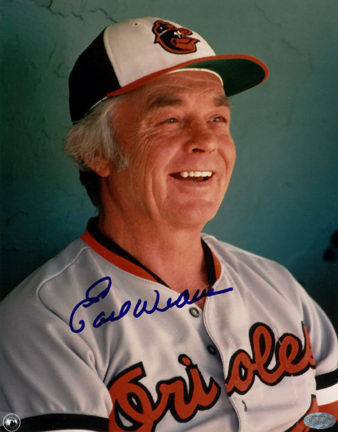
Thought of the Day 8.14.12 Earl Weaver

“I became an optimist when I discovered that I wasn’t going to win any more games by being anything else.”

Earl Weaver

Earl Sidney Weaver was born on this day in St. Louis, Missouri in 1930. He is 82 years old.

Weaver managed the Baltimore Orioles from 1968-1982 and again from 1985-1986.  He became a Hall of Famer a decade later.

He played second base for 13 years in the minor leagues, then he managed for another dozen years in the minors before making it to the Show as a first-base coach for the Orioles in 1968. He took over as Manager in July of that season.

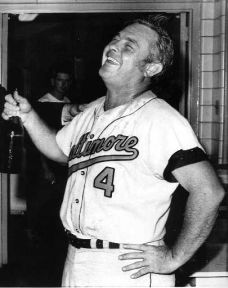
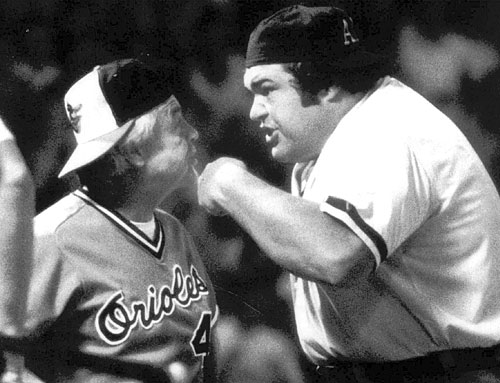
He wore #4 on his Oriole’s jersey and had a .583 winning record while managing the club. The team won 6 American League East titles, had 5 100+ win seasons, won 4 A.L. pennants, and won the 1970 World Series under his leadership.

Weaver didn’t want to bunt or sacrifice to advance a runner, according Hall of Fame player Frank Robinson, “He didn’t even have a hit and run sign…” Earl was all about the three run home run.

He pioneered the use of radar guns to track fast balls in 1975’s Spring Training season (according to the National Baseball Hall of Fame.)

He was famous for his heated arguments with umpires that often ended with the manager kicking Memorial Stadium’s infield dirt at the official. Weaver was tossed from 91 regular season games.

Locals also remember the “Tomato Wars” he had with groundskeeper Pat Santarone. Santarone had a patch of plants in the left field foul area, Weaver grew his maters at home. The two argued (good naturedly) for 17 years over who had the best tomatoes in Baltimore.

After he left the O’s he worked as broadcaster for ABC television providing color commentary during the 1983-84 baseball seasons. He also did Manager’s Corner with Tom Marr while he was with the O’s (some times to very colorful effect.)

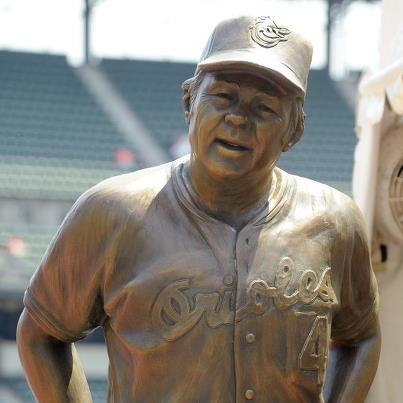
He was elected to the Baseball Hall of Fame in 1996.  A bronze statue of the manager was erected at Camden Yards (the “new” home of the Orioles) in June of this year.  At seven feet the statue towers over the real life Weaver, who is only 5’7″.  Weaver quipped “I guess there will be a lot of kids looking up at me…saying, ‘who is this?'”


Chillin’ out in GRAND CAVERNS

Who’d have thought that things that go drip in a cave could be so pretty?

On our way home from a family vacation in Staunton, VA we stopped at Grand Caverns. The cave was discovered in 1804 by a trapper and opened for tours two years later as “The Grottoes of the Shenandoah”. It is the oldest continually operating “show cave” in America and is rated 2nd best “show cave” (after Carlsbad Caverns in New Mexico) by Parade Magazine. In 1926 it was renamed “Grand Caverns” and it was declared a National Natural Landmark in 1973.

Drapery formations hang from the ceiling in the Persian  Palace  (once known as the Tannery).

During the Civil War soldiers from both sides explored the cave. 200 men signed the walls of the cave. Two of the signatures, one from a Northern soldier, one from a Confederate soldier, were left on the same day, only hours apart. A firearm accidentally discharged inside the cave, piercing one of the shield formations. The hole is still visible today.

The rock formations are always growing, albeit at an extremely slow rate. Oil from human hands block that growth, so visitors aren’t allowed to touch any of the rock formations.  However, visitors will inevitably feel a drip or two while taking a tour. Those are called “Cave Kisses” and are supposed to bring good luck.

The Cathedral Hall is the largest chamber in the caverns. An impressive stalagmite, “George Washington’s Ghost” (foreground) stands century at the center of the hall. The white spot on the ceiling is likely a spot where a shield broke off centuries ago.

Naturally occurring colors in the cave are White (from calcite/calcium carbonate), Red (from iron/iron oxide) or Grey (limestone or manganese). Another color  in the cave is Green (from cave algae which is the result of dampness of the cave combined with lint from clothing and heat and light from the light bulbs.) Colored lights enhance the cave formations in certain areas. With out artificial lights the cave would be pitch black, of course.

The Bridal Chamber has a shield formation with drapery that represents a bride’s veil. It is about 17 feet tall.

With over 200 shield formations, Grand Caverns has more cave shield formations than any other cave or cavern in the eastern United States. No one knows how these formations are made, but for some reason they form flat disks rather than columns.  Some notable shield formations in Grand Caverns are  the “Clam Shell”  formation, a triple shield formation in the Lily Room, and the “Bride’s Veil” formation that combines both a shield and drapery.

The Lily Room. A shield with drapery resembles a calla lily and takes center stage in the Lily Room

Another formation in the Lily Room.

Grand Caverns is open daily except Thanksgiving, Dec 24, 25 & Jan 1. Summer Hours (April to Oct 31) are 9-5. Winter Hours (Nov 1-March 31) are 10-4. Tours are given hourly. For pricing and directions click here.

At the lowest part of the cave (as seen on the tour) looking up to the highest part of the cave.


thought of the Day 8.13.12 Alfred Hitchcock

“If it’s a good movie, the sound could go off and the audience would still have a perfectly clear idea of what was going on.”

Alfred Hitchcock

Alfred Hitchcock Presents

Alfred Hitchcock Presents (Photo credit: twm1340)

Alfred Joseph Hitchcock was born on this day in Leytonstone, England in 1899. Today is the 113th anniversary of his birth.

He grew up as the middle child of three siblings in a very strict family. When he was a little boy his father once sent him with a note to the town police station. The note asked the constable to lock Alfred up for a jail term of 10 minutes as punishment for bad behavior. The possibly apocryphal story ended with the policeman putting 5-year-old Alfred in a cell for a few minutes before letting him out with a stern warning that “this is what we do to naughty boys.” It was a bit more fire and brimstone guilt heaped on top the boys already strict Catholic upbringing.

He attended St. Ignatius College and London County Council School of Engineering and Navigation. He was rejected for service in WWI because of his health, but served as a cadet with the Royal Engineers. He worked for a company called Henley’s as a draftsman and advertising designer. The company had an in-house publication, The Henley Telegraph, and Hitchcock became one of its most prolific contributors. His stories were generally suspenseful, funny and usually ended with a twist.

His first foray into films was as a title card designer for the nascent Paramount Pictures (London) where he designed title cards for silent movies. He worked for a number of studios at the start of his career and began to write for the movies in the early 1920’s. He did work in Germany where he observed the expressionistic style at Babelsberg Studios. His directorial debut was a bit of a fizzle as Number 13 (1924) was cancelled before it the film got in the can for financial reasons, The Pleasure Garden was flop, and all prints for The Mountain Eagle  have been lost.

Cover of "The Lodger"

Cover of The Lodger

In 1926 Hitchock had his first directorial success with The Lodger: A Story of the London Fog. His first talkie was Blackmail, which he made while working with British International Pictures. It was also the first of Hitchcock’s films to use a famous landmark (this time the dome of the British Museum) as a back drop. Other Hitchcock films from the period are The Man Who Knew Too much (1934) and the excellent 39 Steps.  He was the highest-paid director in England and earned the nick name “Alfred the Great.”

In 1939, as the specter of war loomed again in Europe, Hitchcock was lured to Hollywood to work for David O. Selznick. He directed a film based on the Daphne du Maurier  book  Rebecca (the film won an Oscar). He worked steadily and successfully through out the 1940s for a number of Hollywood studios, producing movies like Lifeboat (1944), Spellbound (1945), and Notorious (1946) .

Rope (1948) was the first movie he made in color. It starred Jimmy Stewart (Stewart would star in four Hitchcock films) and featured long tracking shots that ranged from 4.5 to 10 minutes. (10 Minutes was the maximum a camera could hold at one time.) The necessary cuts were “hidden”  as a dark object came in front of the lens. The result was a seamless story.

Cropped screenshot from the trailer for the fi...

Cropped screenshot from the trailer for the film Rear Window (Photo credit: Wikipedia)

Dial M for Murder, Rear Window and To Catch a Thief  marked a trifecta of 50’s films where the director collaborated with the beautiful Grace Kelly. Hitchcock paired her against Ray Miland (Murder),  Stewart (Window) and Grant (Thief). They were extremely popular. Kelly stopped making films the next year when she married Prince Rainier of Monaco.

English: Doris Day and James Stewart on the of...

English: Doris Day and James Stewart on the of The Man Who Knew Too Much, 1956. Alfred Hitchcock is in the back (Photo credit: Wikipedia)

He rounded out the 1950s with The Man Who Knew Too Much (1956), Vertigo (1958), North by Northwest (1959) and Psycho (1960).  He also became a US Citizen in 1955 and debuted the television show Alfred Hitchcock Presents.

In 1963 he adapted another Daphne du Maurier story, The Birds.

He continued to direct, write and produce, but his health problems meant the pacing slowed down. The critics said the quality diminished as well, with the exception of Marne.

He had a cameo in almost all of his movies. Often he is just standing or sitting or walking by a main character, very briefly in a scene. In Lifeboat he appeared in a newspaper advertisement as the before and after client for Reduco weight loss product. The site Alfred Hitchcock The Master of Suspense has a full list of his Cameos.

English: Studio publicity photo of Alfred Hitc...

English: Studio publicity photo of Alfred Hitchcock. (Photo credit: Wikipedia)


Thought of the Day 8.10.12 Norma Shearer

“An adventure may be worn as a muddy spot or it may be worn as a proud insignia. It is the woman wearing it who makes it the one thing or the other.”

Norma Shearer

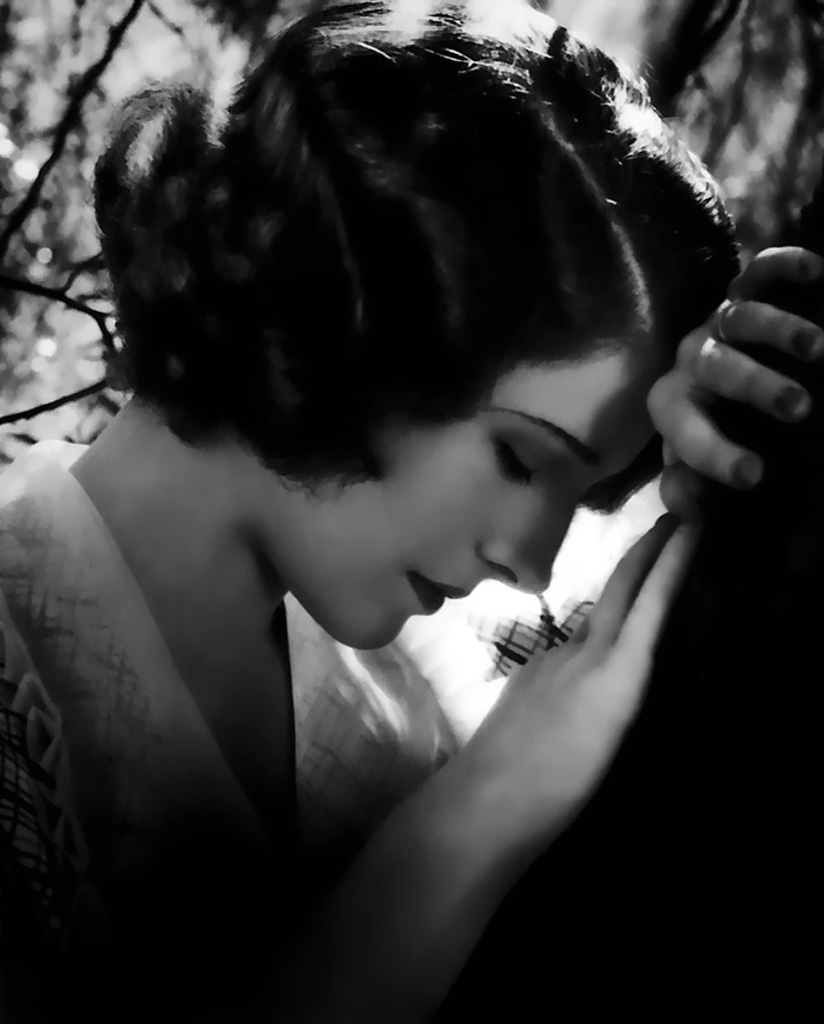
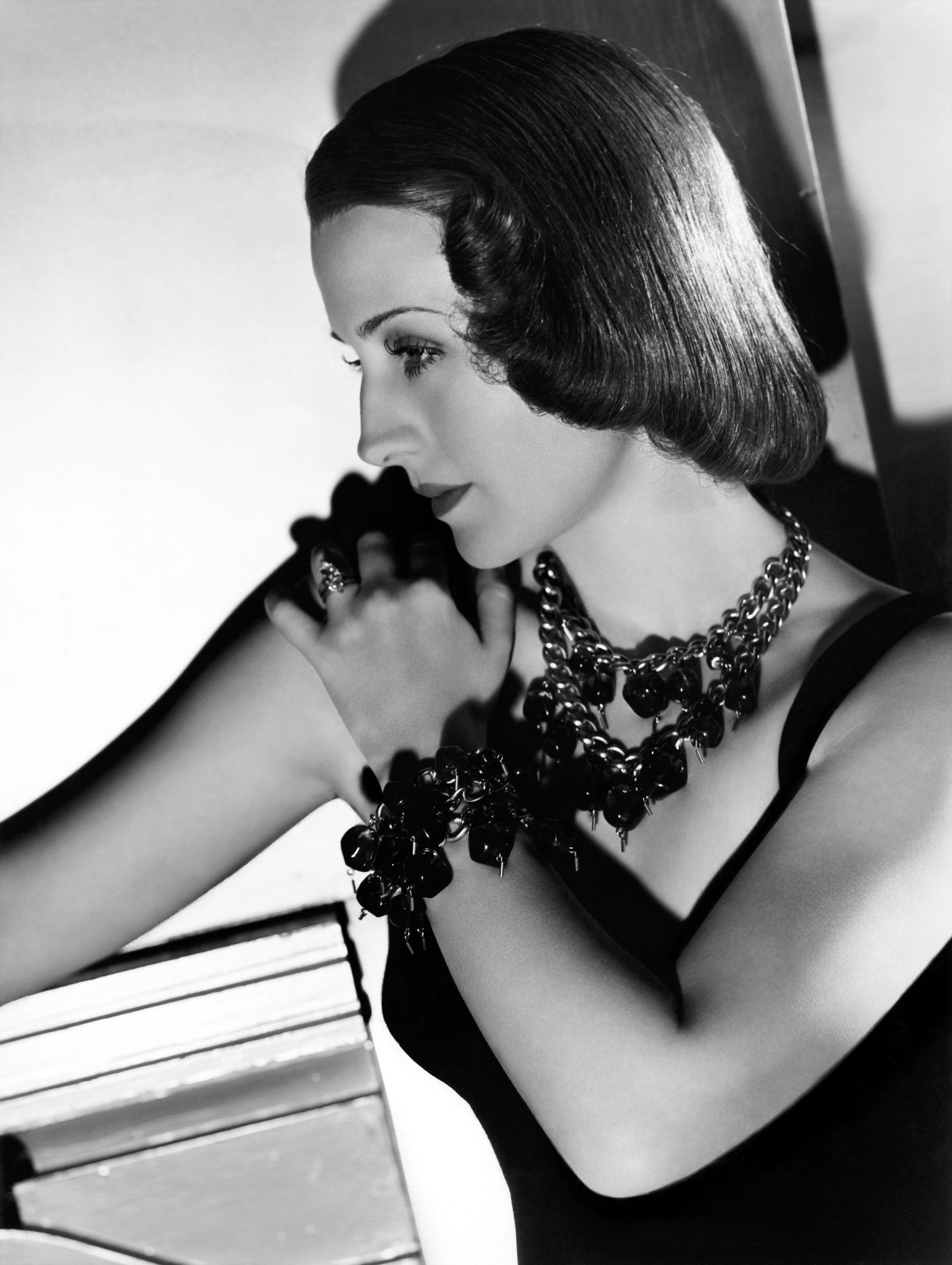
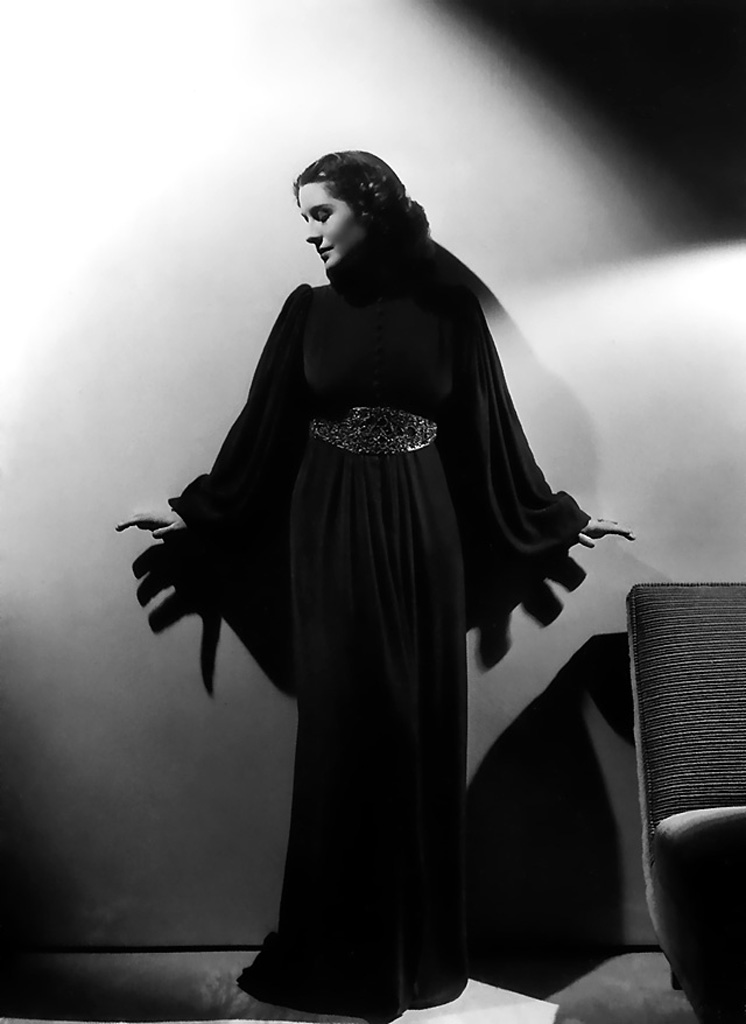
Edith Norma Shearer was born on this day in Montreal Canada in 1902. Today is the 110th anniversary of her birth.

Shearer showed early promise as a pianist. Indeed, her mother, who was a bit of a stage mother, wanted her to become a world class concert pianist.  But when Norma was treated to a Vaudeville show for her 9th birthday all that changed. She wanted to become an actress. In 1918 when her father’s business failed and her parents separated her mother sold the piano and bought tickets to New York City. A Montreal theatre owner had given Norma a letter of introduction to Florenz Ziegfeld of Ziegfeld Follies fame. The Follies audition didn’t pan out, but Norma got work as an extra on several films.

She took up modeling (for the much needed money it offered)

 “I could smile at a cake of laundry soap as if it were dinner at the Ritz. I posed with a strand of imitation pearls. I posed in dust-cap and house dress with a famous mop, for dental paste and for soft drink, holding my mouth in a whistling pose until it all but froze that way.” [ From Norma Shearer: A Life]

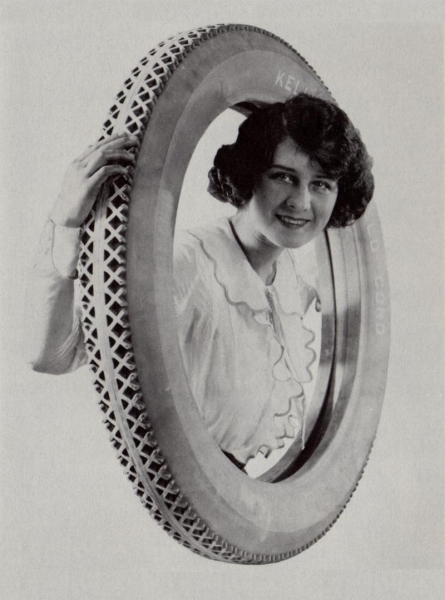
Springfield Tires hired her as their go to model and dubbed her “Miss Lotta Miles.

It took her a year of bit parts, walk ons and modeling gigs, but in 1921 she got a break and was cast in The Stealers. In 1923 she caught the eye of Hollywood talent scout Hal Roach and signed a six month contract with Louis B. Mayer for $250 a week. She met Irving Thalberg, the vice-president of the studio and did a screen test. After a rocky start on the West Coast, Shearer hit her stride and was cast in six movies in  eight months. By 1924 she was a big enough star that she landed the role of Consuelo (the love interest) in He Who Gets Slapped MGM‘s first big budged attraction.

She renewed her contract with MGM (making considerably more money) and began dating Irving Thalberg who was then the chief of production. While she was filming The Student Prince in Old Heidelberg the couple became engaged. They were married on September 29, 1927. She refused to take off her wedding ring, even if a role demanded it (she covered it with flesh-colored tape instead.) The two stayed together until Thalberg, who had a serious heart condition, died in 1936. Having a husband who was chief of production didn’t hurt her career. She could pick and choose the juiciest roles (something other starlets, like Joan Crawford, openly resented. — Crawford rather snarkily referred to Shearer at “Miss Lotta Miles.”)

Her first talkie was The Trial of Mary Dungan. She won an Oscar a year later for The Divorcee. And she earned the moniker the First Lady of MGM. Other notable movies include: The Barretts of Wimpole Street, Romeo and Juliet, Marie Antoinette and The Women.

Soon after she retired in 1942 she married her second husband, Martin Arrouge, a ski instructor eleven years her junior. They withdrew from the glitz and glam of Hollywood and Shearer refused interviews and roles (like Norma Desmond in Sunset Boulevard — a gig that won Gloria Swanson an Oscar) Shearer once quipped: “Never let them see you in public after you’ve turned 35. You’re finished if you do!”


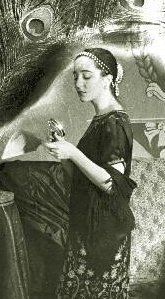
[All photos courtesy of the Norma Shearer Annex.  Except Miss Lotta Miles which is from Hollywood-Legends.webs.com ]

————————————————-

[Please Note that ritaLOVEStoWRITE is stepping away from the keyboard for a few days to get some fresh air. Be back soon.]


Thought of the day 8.9.12 Audrey Tautou

“In France we have a law which doesn’t allow the press to publish a photo that you didn’t approve. It lets the paparazzi take the picture, but if they publish this picture, you have the choice to sue the newspaper. So me, I always sued them.”

Audrey Justine Tautou

Amélie

Amélie (Photo credit: Wikipedia)

Audrey Justine Tautou  was born on this day in  Beaumont, in the Auvergne region of France in 1976 (or maybe it was 1978, no one seems to really know, and Tautou isn’t telling.) She is 36  (or 34).

She was named after actress Audrey Hepburn, it seemed destined that the French waif would become an actress. She studied acting Cours Florent (a private drama school in Paris), and, upon graduation quickly found work on television.

She won the Canal+ “Young Debut” award in 1998. The following year she won a Ceasar for Best New Actress in her work in the film Venus Beauty Institute .  She had three movies come out in 2000, Le Libertin, Voyous Voyelle, and Happenstance. She won the Prix Suzanne Bianchetti Award for her work that year.

Then came Amelie. Le Fabuleux destin d’Amélie Poulain, was directed by Mathieu Kassovitz, who also co-starred. Tauto plays the a young waitress who, despite a sad and lonely childhood, decides

to dedicate herself to bringing happiness to those who are less fortunate than she, whilst punishing those who deserve to be punished.[FilmsdeFrance.com]

It made her the best paid actress in France, and gave her international exposure.

The Da Vinci Code (film)

The Da Vinci Code (film) (Photo credit: Wikipedia)

In 2002 she made her first English Language film with director Stephen Frears, Dirty Pretty Things. And in 2006 she starred in the block buster Da Vinci Code directed by Ron Howard and starring Tom Hanks.

Coco Before Chanel

Coco Before Chanel (Photo credit: Wikipedia)

In 2009 she embraced the role of fashion icon Coco Chanel in Coco Before Chanel.

In 2012 she made her stage debut at the Theatre de la Madeleine in Paris in Ibsen’s A Doll’s House.

Tautou says she is not interested in doing sequels. “ I certainly don’t want to be in Thingy Blah Blah 3, if you know what I mean.”  She enjoyed working with Howard and Hanks on Da Vinci Code, but ““I never want to do the same things twice. I like surprises.”


Thought of the Day 8.8.12 Marjorie Kinnan Rawlings

“I do not know how anyone can live without some small place of enchantment to turn to.”

Marjorie Kinnan Rawlings

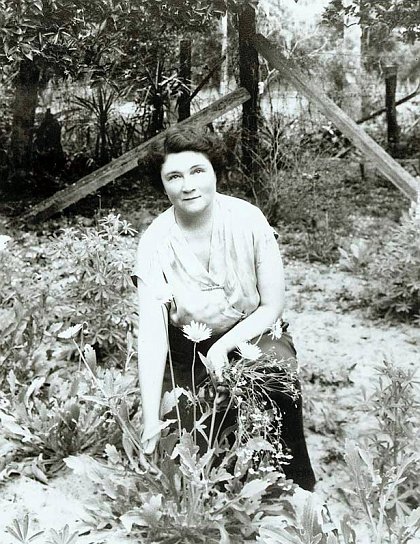
Rawlings in her garden.

Marjorie Kinnan was born on this day  in Washington D.C. in 1896. Today is the 116th anniversary of her birth.

She got her love of nature from her parents. Although her father was a principal examiner in the U.S. Patent Office, he was happiest when he was walking his Maryland farm. Her mother grew up on a farm in Southern Michigan, and Marjorie would spend summers at the family homestead. According to The Marjorie Kinnan Rawlings Society website:

Living close to the land as she was growing up “planted deep in [her] a love of the soil, the crops, the seasons and a sense of kinship with men and women everywhere who live close to the soil”

At six she started to write short stories, some of which she submitted to the children’s section of the Washignton Post. At 15 her short story “The Reincarnation of  Miss Hetty” won a literary prize and Marjorie was hooked.

When she was 17 her father passed away and she moved with her mother to Wisconsin. She attended the University of Wisconsin and her works were published in  the Wisconsin Literary Magazine.  While at the University she met Charles Rawlings.
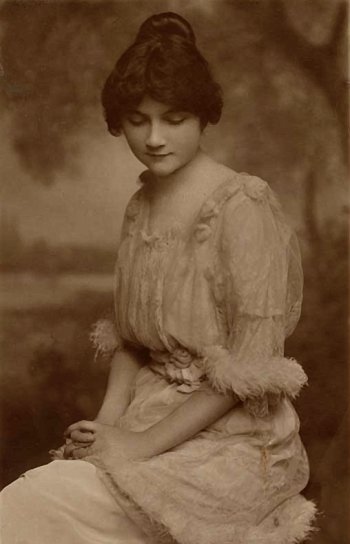
Rawlings in 1913.

After graduating with honors she moved to New York. She married Rawlings in 1919 and the couple moved to Louisville, Kentucky. They both wrote for the Louisville Courier-Journal (Charles was a features writer, Marjorie wrote the “Live Women in Louisville” column.  When they moved to Rochester, New York Marjorie wrote poems about cooking, mending, gardening, et ect. in the syndicated column  Songs of a Housewife.  It was distributed nationwide to 50 papers. She also worked  on a novel, Blood of My Blood.  The manuscript  for Blood was lost for years, and the novel wasn’t published until 2002, nearly sixty years after her death.)
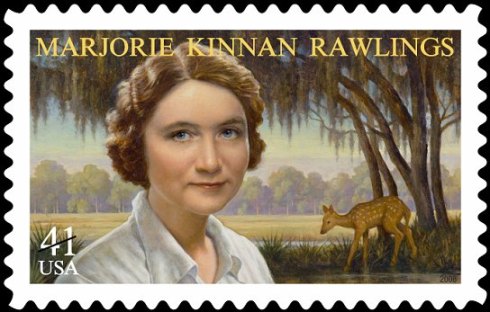
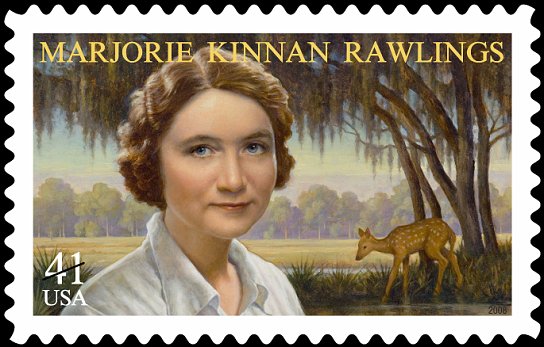
The US Postal Service stamp

When her mother passed away in 1928 she left Marjorie a small inheritance and the couple purchased an orange grove named Cross Creek near Hawthorne, Florida.

“This was not the Gold coast of Florida. . . . It was a primitive section off the beaten path, where men hunted and fished and worked small groves and farms for a meager living. . . . And the country was beautiful, with its mysterious swamps, its palms, its great live oaks, dripping gray Spanish moss, its deer and bear and raccoons and panthers and reptiles” [The Marjorie Kinnan Rawlings Society website]

Rawlings was smitten by the rough Floridian back wood and groves, and the people who lived there. She found a new voice as she began to chronicle their stories. Gal Young Un won the 1932 O Henry Award. She moved further into the “scrub” to research her novel South Moon Under. She stayed with Piety Fiddia and her son Leonard and learned how to kill rattlesnake and  to make moonshine. The book was a Pulitzer Prize finalist and Book-of-the Month Club selection.

But the Florida wild was not for Charles Rawlings and the couple divorced in 1933.

Cover of "The Yearling"

Cover of The Yearling

Rawlings wasn’t happy with her next novel, Golden Apples, which she called “interesting trash instead of literature.” But, in 1939, she rebounded with her follow-up novel, The Yearling. The Yearling is a coming of age tale about a back woods boy named Jody Baxter who adopts a fawn, Flag. The book earned Rawlings a Pulitzer Prize for Literature. MGM  made it into a major motion picture starring Gregory Peck as Jody’s kindly father “Penny” Baxter and Jane Wyman as his distant mother. (Both performers were nominated for Academy Awards).

Cover of "Cross Creek"

Cover of Cross Creek

The autobiographical Cross Creek hit in 1942. Upon reading it one critic called Rawlings a “female Thoreau.” It was a Book-of-the-Month Club pick and stayed at the top of the best sellers list for months. It was also published in a special armed forces edition for those serving overseas in WWII. According to Powells City of Books the novel tells the story…

of Marjorie Kinnan Rawlings’s experiences in the remote Florida hamlet of Cross Creek, where she lived for thirteen years. From the daily labors of managing a seventy-two-acre orange grove to bouts with runaway pigs and a succession of unruly farmhands, Rawlings describes her life at the Creek with humor and spirit. Her tireless determination to overcome the challenges of her adopted home in the Florida backcountry, her deep-rooted love of the earth, and her genius for character and description result in a most delightful and heartwarming memoir.

Cover of "Cross Creek Cookery"

Cover of Cross Creek Cookery

She wrote Cross Creek Cookery as kind of a companion piece in 1942. She’d been so descriptive about the food in Cross Creek that the readers deluged her with request for recipes. She shrugged, remembered the old adage that if you “Scratch a cook and you get a recipe” and began work on Cross Creek Cookery. It’s been called “the classic book on southern cooking” and is filled with over 250 recipes from alligator-tail, hush-puppies, sweet potato pone, grits, and desserts like Deadly Southern Pecan Pie. Rawlings loved to cook and entertain for, as she said:

“Food imaginatively and lovingly prepared, and eaten in good company, warms the being with something more than mere intake of calories.”

She married Norton S. Baskin, a long time friend and business associate  in 1941.

Through out the 40’s she worked on her last book The Sojourner. Rawlings leaves Florida behind and sets The Sojourner in Michigan. Good Reads gives this synopsis of the book:

The Sojourner is the story of a good man: of the influence of his steady, quiet strength upon others, especially the members of his immediate family, and of what they–characters less strong and less stable–do to him throughout the course of a long life.

She bought a farm-house in Upstate New York to aid in the research of the book. It was published in 1953.

Cross Creek

[All photos are courtesy of the Marjorie Kinnan Rawlings: Author of The Yearling site. Click on the link to see many more photos of Cross Creek, Mrs. Rawlings, her articles and book covers.)

Thought of the Day 8.7.12 Mata Hari

“I am a woman who enjoys herself very much; sometimes I lose, sometimes I win.”

–Mata Hari

Postcard of Mata Hari in Paris

Postcard of Mata Hari in Paris (Photo credit: Wikipedia)

Gertrud Margarete “M’greet” Zelle was born on this day in Leeunwarden, Netherlands in 1876. Today is the 136 anniversary of her birth.

The second of five children, M’greet was the only girl. Her father doted on her calling her “an orchid among buttercups.” She did well in school, especially in langauge classes. She had an active imagination and a flair for the dramatic (her dark hair and eyes and olive skin already marked her as exotic amongst the pale skinned, blond haired Dutch villagers) and was popular with her classmates. She lived happily until her father lost his money, and the family status, in stock market speculations.  When her mother died M’greet and the boys were separated and shipped off to relatives willing to look after them. After a short stint training to become a kindergarten teacher she moved to The Hague and stayed with her uncle.

At 5’10” M’greet was taller than the average dutch man. And she was small chested. She also didn’t have any money. Not the most attractive qualities for a young woman in wont of a husband. But she was pretty in an exotic sort of way, she was vivacious, she had style and grace and she planned to make the most of it. She answered an ad that read “Officer on home leave from Dutch East Indies would like to meet girl of pleasant character — object matrimony.” The officer the ad referred to was 38 year old Captain Rudolph Macleod, (a friend of his placed the ad with out his knowledge, but he he agreed to meet M’greet and the two fell for each other.) Despite the 20 year difference in their ages the two got married. The marriage proved an unhappy one with Rudolph, an alcoholic, openly taking mistresses and abusing his wife. They moved to Java and Sumatra for his job in the Dutch Colonial Army.

Rudolph and Norman John Mac Leod

Rudolph and Norman John Mac Leod (Photo credit: Wikipedia)

Despite Rudolph’s orders otherwise, M’greet learned to speak Malay. She immersed herself in the culture and joined a local dance company. It was here that she took the artistic pseudonym “Mata Hari” Although the phrase “Mata Hari” has come to mean a kind of femme fatal spy, the term literally means “eye of the day” or “sun”.  They had two children, Norman John and Louise Jeanne. While the MacLeods were stationed in Sumatra the children took seriously ill (they were either poisoned or suffered from complications from the treatment of syphilis.) The little boy died.

Louise Jeanne Mac Leod (1898-1919) daughter of...

Louise Jeanne Mac Leod (1898-1919) daughter of Mata Hari (Photo credit: Wikipedia)

M’greet and Rudolf’s marriage, already on rocky ground, spiraled downward. When they returned to Amsterdam in 1902 she filed for separation. The Dutch courts, surprisingly, granted her request, gave her custody of little Louise Jeanne and ordered Rudolph to pay 100 guilders a month is support.  The support never came. and a bitter Rudolph publicly denounced his “evil” wife for deserting him. With out a  means of feeding or clothing her daughter she reluctantly turned the child over to her father. M’greet eked by relying on the kindness of her relatives.

Mata Hari

Mata Hari (Photo credit: Wikipedia)

In 1903 she decided to change her life. She moved to Paris and under the name “Lady MacLeod” she performed as a circus horse rider, a dancer and an artist’s model. The Orientalism movement in dance was sweeping Europe and her exotic/erotic style and Java inspired dancing became a hit. The website  Mata Hari.com quotes Russell Warren Howe’s book to describe the dance…

…(the) diaphanous shawls she wore as the dance began were cast away to tempt the god until finally…the sarong was abandoned and her silhouette, with her back to the audience, writhed with desire toward her supernatural lover. … All passion spent, she touched her brow to Siva’s feet; one of the attendant dancers tiptoed delicately forward and threw a gold lamé cloth across the kneeling figure, enabling her to rise and take the applause.”

He goes on to say that  her overnight success “was pivotal in elevating the striptease to an art form.” She took her act on the road and danced at all the European hot spots and capitals. She was a master of illusion in that she did a striptease without stripping all the way down. She wore a body stocking that matched her own skin color and she never took off her bejeweled bra (which she padded.) She dropped the moniker of “Lady MacLeod” and went as “Mata Hari”  reinventing herself as a daughter of Indian temple dancer, raised in the temple of Siva. She became a courtesan and developed relationships  with wealthy, powerful men.  She had always loved “a man in uniform” and now she had lovers of the highest rank.

The Netherlands remained neutral during WWI so she had access to both Germany and France. According to FirstWorldWar.com :

It was said that while in The Hague in 1916 she was offered cash by a German consul for information obtained on her next visit to France.  Indeed, Mata Hari admitted she had passed old, outdated information to a German intelligence officer when later interrogated by the French intelligence service.

Mata Hari herself claimed she had been paid to act as a French spy in Belgium (then occupied by German forces), although she had neglected to inform her French spymasters of her prior arrangement with the German consul.  She was, it seemed, a double agent, if a not very successful one.

While traveling in France she was arrested in Paris on February 13, 1917. She was held Saint-Lazare prison and interrogated on charges of espionage. She maintained her innocence.  The trail was held on July 24 & 25. She was found guilty  and sentenced to death. On October 15, 1917 she refused a blind fold and faced her execution squad. She blew them a kiss just before the fired.

The Execution of Mata Hari in 1917. http://www...

The Execution of Mata Hari in 1917. Probably a reconstruction for the movie of 1920. (Photo credit: Wikipedia)


Thought of the Day 8.6.12 M. Night Shyamalan

“I like to write in a shroud of secrecy because I have to keep finding ways to scare myself.”

–M. Night Shyamalan

M. Night Shyamalan

M. Night Shyamalan (Photo credit: Wikipedia)

Manoj Shyamalan was born on this day in Mahe, Pondicherry, India in 1970. Today is his 42nd birthday.

His parents lived in the US prior to his birth, but his mother traveled back to India to be with her parents for the last few months of her pregnancy. She came back to the states with the baby when he was 6 weeks old. He was raised outside of Philadelphia, Pennsylvania. He was given a Super 8 camera as a kid and began making home movies starring himself, his friends and his toys.  While attending New York University’s Tisch School of the Arts he added “Night” as his middle name. He also finished his first  feature film, Praying with Anger. The film roughly echoed his own experiences on a visit to India and deals with cultural tensions and family secrets.

Miramax optioned Wide Awake which Shyamalan directed and shot in Pennsylvania (his location of choice.) Then he penned the script for Stuart Little.


Cover of "The Sixth Sense (Collector's Ed...

Cover via Amazon

His big break came with The Sixth Sense. [No spoilers here, all I’ll say is… if you haven’t seen this tight, dramatic, ghost story rent it now. It is part 1 of the  M. Night trifecta ] The movie was filmed in Philadelphia and starred Bruce Willis and Haley Joel Osment. Shyamalan  again directed. And it received Academy Award nominations for Best Picture and Best Director.

He added Producer credit to the list with 2000’s Unbreakable. The film tapped Willis as star again, this time partnering him with Samuel L. Jackson.   More superhero than supernatural this film did well at the box office, but didn’t deliver the punch of its predessor.


Mel Gibson and Joaquin Phoenix starred in Signs a sci-fi, alien invasion thriller. [It is  part 2 of the M. Night trifecta so add this to your queue as well.]


Cover of "The Village (Full Screen Editio...

Cover via Amazon

The Village shifts the action to an idealistic 19th century farming village. There’s just one problem, the surrounding woods are populated by huge clawed monsters. As long as the villagers keep inside set boundaries and don’t wear red (red is a bad color and attracts the monsters) all is well. But this is an M. Night Shyamalan film… nothing ever stays all well.  The Village did not achieve the audience or critical favor that Sixth Sense or Signs enjoyed. [But I really like it. So it’s my number 3 pick for the trifecta. ]

He based The Lady in the Water with Bryce Dallas Howard and Paul Giamatti on a story he told his kid. During filming of Lady he had a break with Disney films. Warner Bros. picked up the picture, but it lost money.

The writer/director returned to his horror roots with The Happening starring  Mark Walhberg and Zoey Deschanel .

In 2010 He made The Last Airbender  based on Nickelodeon’s Avatar: The Last Airbender. The show received very poor reviews, but has done well internationally. He also wrote and produced Devil, a story about people stuck on an elevator with the Devil in disguise.

He is currently in post-production for After Earth, a science fiction thriller staring Jaden Smith.

Shyamalan’s latest project takes him to the television’s cable network Syfy where it has just been announced that he will work with producer Marti Noxon  (of Buffy the Vampire Slayer fame) on of a scripted series called Proof. According to a press release for the show:

In Proof, after the tragic accident and sudden death of his parents, the son of a billionaire tech genius offers a large reward for anyone who can find proof of life after death,

Shyamalan will direct the pilot which he and Noxon will co-write .


Thought of the Day 8.5.12 Neil Armstrong

—————————————UPDATE—————————————

Sadly I have to give an update to this post.

One of America’s greatest heros, Neil Armstrong, passed away today due to complications from cardiovascular procedures. He had  heart surgery last month in Cincinnati, Ohio.

“Looking back, we were really very privileged to live in that thin slice of history where we changed how man looks at himself and what he might become and where he might go,” Armstrong said.

—————————————UPDATE—————————————

“I believe every human has a finite number of heartbeats. I don’t intend to waste any of mine”

–Neil Armstrong

Neil A. Armstrong was born on this day in Wapakoneta, Ohio, in 1930. He is 82 years old.

He grew up near the local airport and took flying lessons as a teenager. He got his pilots license before he got his driver’s license.

Armstrong was a naval aviator for three years, flying 78 combat missions during the Korean War,  prior to joining the National Advisory Committee of Aeronautics (NACA) in 1955. (The NACA was the precursor to NASA.) He  logged over 2,400 hours of air time testing experimental aircraft at Edwards Airforce Base.

According to the NASA’s Glenn Research Center web site:

He has flown over 200 different models of aircraft, including jets, rockets, helicopters and gliders.

In 1962 Armstrong became one of the “New Nine” NASA astronauts, the second group of men selected for US space flight to augment the Mercury 7. The Mercury astronauts established orbital space flight, the New Nine would fly in Gemini space capsules and would tackle docking two vehicles in space and space walks.

English: Close-up on orbiting Agena D rocket s...

English: Close-up on orbiting Agena D rocket stage Polski: Zbliżenie orbitującego członu rakietowego Agena D (Photo credit: Wikipedia)

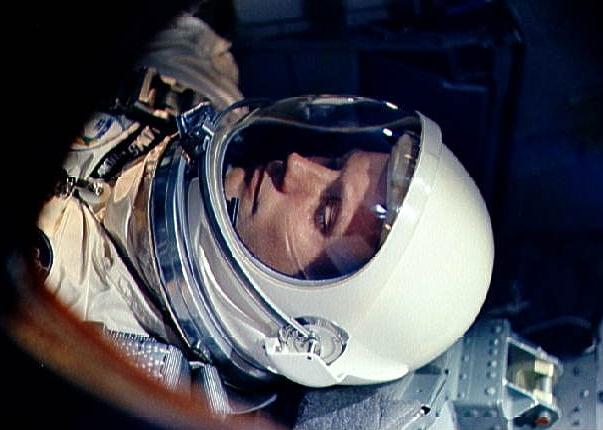
On his historic Gemini 8 mission Armstrong and Dave Scott successfully docked their ship with an unmanned Agena target vehicle. It was an essential first step  towards getting to the moon. Unfortunately about 27 minutes after docking the two ships began to roll and yaw. Assuming the problem was with the Agena, Armstrong undocked, but it was a faulty thruster on the Gemini that was making the capsule spin, and undocking only exacerbated the problem. Armstrong and Scott had to shut down Gemini’s main reaction control system and use the reentry thrusters to zero out yaw and roll on the wildly spinning craft. Armstrong’s masterful flying skills were successful, but they used up 75% of the system’s fuel and Mission Control cut short the flight.

On the Gemini 11 flight he acted as CAPCOM — the person at Ground Control who interfaces with the astronauts in space — and he was the commander of the back-up crew for Apollo 8 (the first human space flight to leave Earth’s orbit, fly to the moon — but not land — and return to Earth.)

Flag of the United States on American astronau...

Flag of the United States on American astronaut Neil Armstrong’s space suit (Photo credit: Wikipedia)

Armstrong was the Commander of Apollo 11, the first manned space craft to land on the Moon. He accompanied by Michael Collins, who stayed aloft in the Command Module, and Edwin “Buzz” Aldrin, Jr. who touched down on the Moon’s surface on July 20, 1969 with with Armstrong. Armstrong descended a lader and took the first steps on the lunar surface. Armstrong and Aldrin had about 2 hours outside the lander, the Eagle,  to take photographs, set up experiments and collect moon rocks. The Eagle blasted off from the Sea of Tranquility and  Armstrong and Aldrin rejoined Collins on the Command Module, Columbia.

The reverse of the Anthony dollar is based upo...

The reverse of the Anthony dollar is based upon the insignia of the Apollo 11 mission, which was also used on the reverse of the Eisenhower dollar that preceded it. (Photo credit: Wikipedia)

He worked for NASA as Deputy Associate Administrator for aeronautics until 1971.

Post NASA he taught and did research as a professor of aerospace engineering at University of Cincinnati and served as the chairman of the board for several privately owned aerospace/defense industries.

Buzz Aldrin walks on the moon, July 20, 1969

Buzz Aldrin walks on the moon, July 20, 1969. The photo was taken by Armstrong. (Photo credit: Wikipedia)

[Please note that I did not say Armstrong was the first man to LAND on the moon. Both Aldrin and Armstrong landed on the Moon at the same time.  … Armstrong was the first man to WALK on the Moon.]