The following is a talk I gave at the JASNA:MD winter meeting in Baltimore. (JASNA stands for Jane Austen Society or North America). It is written (and was given) in first person, as Jane. I didn’t feel up to presenting in front of a room full of JA scholars as just little ole me. The numbers at the beginning of some of the paras refer to where the allusions fall in novel.
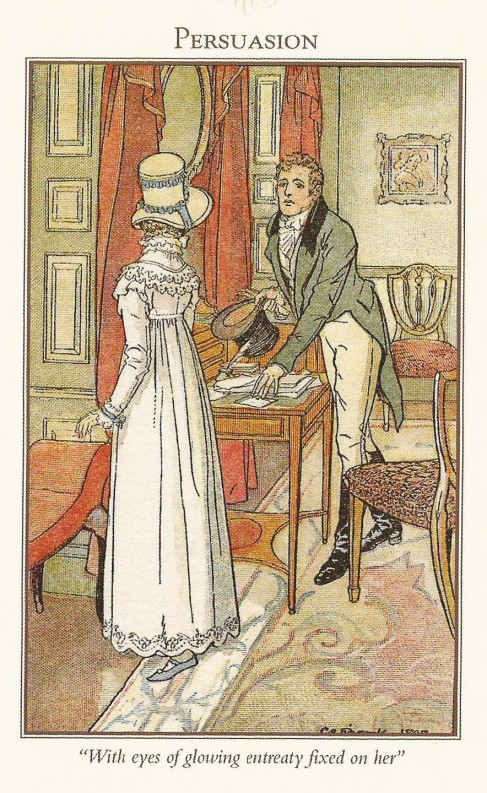
The last novel I completed was Persuasion. It is shorter than my earlier works, and, perhaps because of my illness it is a bit less polished. The pace of Persuasion is uneven with some scenes being tight, brisk and full of information, while, I fear, others lumber along like a country dance and take pages and pages in getting to the point. And I’m ashamed to admit that subplots and characters are unsatisfactorily deployed. Alas it was left to my dear brother Henry to publish it, along with Northanger Abbey, after I left this mortal plane in 1817.
Like many of my novels there’s an touch of the Fairy Tale lurking in the plot. Persuasion and Mansfield Park both owe a bit to Cinderella. Anne Elliot is treated as a “nobody” through out the book by her ridiculously vain father, Sir Walter, and her sisters, Elizabeth and Mary. There maybe no pumpkin or glass slipper, but, dear reader, rest assured there is a ‘prince’ at the end.
1.1
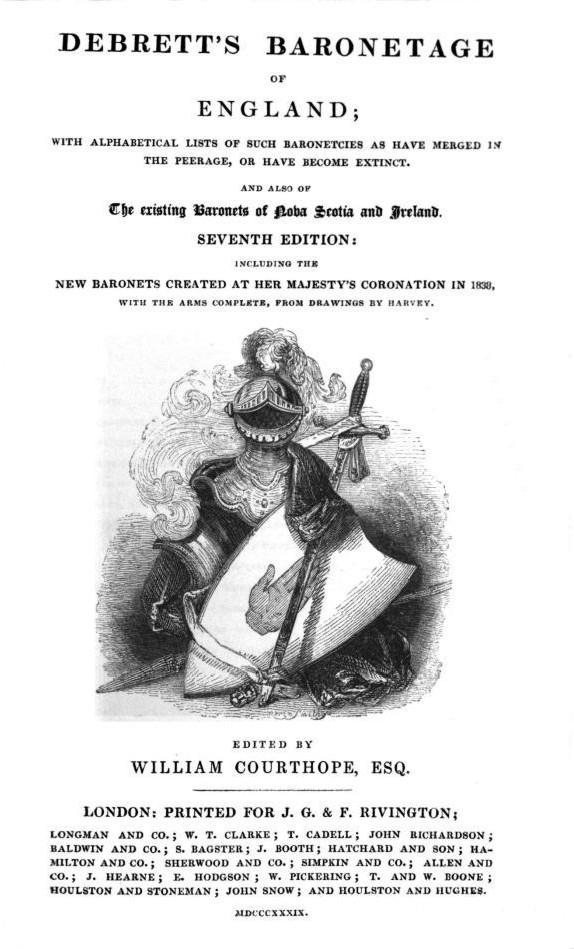
My first literary allusion is to John Debrett’s Baronetage of England. The Baronetage is Sir Walter’s favorite book, indeed it is the only book he ever reads. It is almost always open to page on the Elliot’s of Kellynich Hall. The book is a genealogical guide to the British Ton, a Regency Who’s Who of the Peerage. Inclusion in the book reinforces Sir Walter’s very high opinion of himself. And although HE is quite fictional, I am afraid to say there are those of my acquaintance who spend more time turning the leaves of the Baronetage than those of the Good Book.
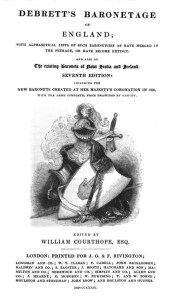
Here’s an ABBREVIATED listing from the REAL Baronetage:
Barrington, of Barrington-Hall, Essex. Created Baronet, June 29, 1611.
Ti/TR. Camden, in his Britannia, fays, * Barrington-Hall « the feat of that eminent family of the Barringtons, who, in the time of King Stephen, were greatly enriched with the estate of the Lords Montfitchct; a match with the daughter and co- heir of Henry Pole, Lord Montacute…
By including the book’s fictionalized entry for the Elliot’s I cleverly introduce several of the novels main characters.
1.8 Another reference list appears in Chapter 8. We are at Uppercross. Captain Wentworth is having dinner with the Musgrove’s and Anne. The eldest Musgrove sisters, Louisa and Henrietta pull out the Navy List to find out which ships Captain Wentworth had commanded. It is a calculated move of flirtation on their part. He is looking for a wife, and any pretty girl who shows a passing interest in the Navy will be sure to catch his eye.
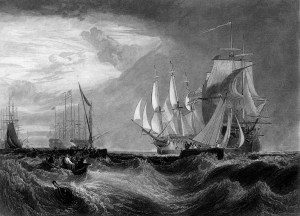
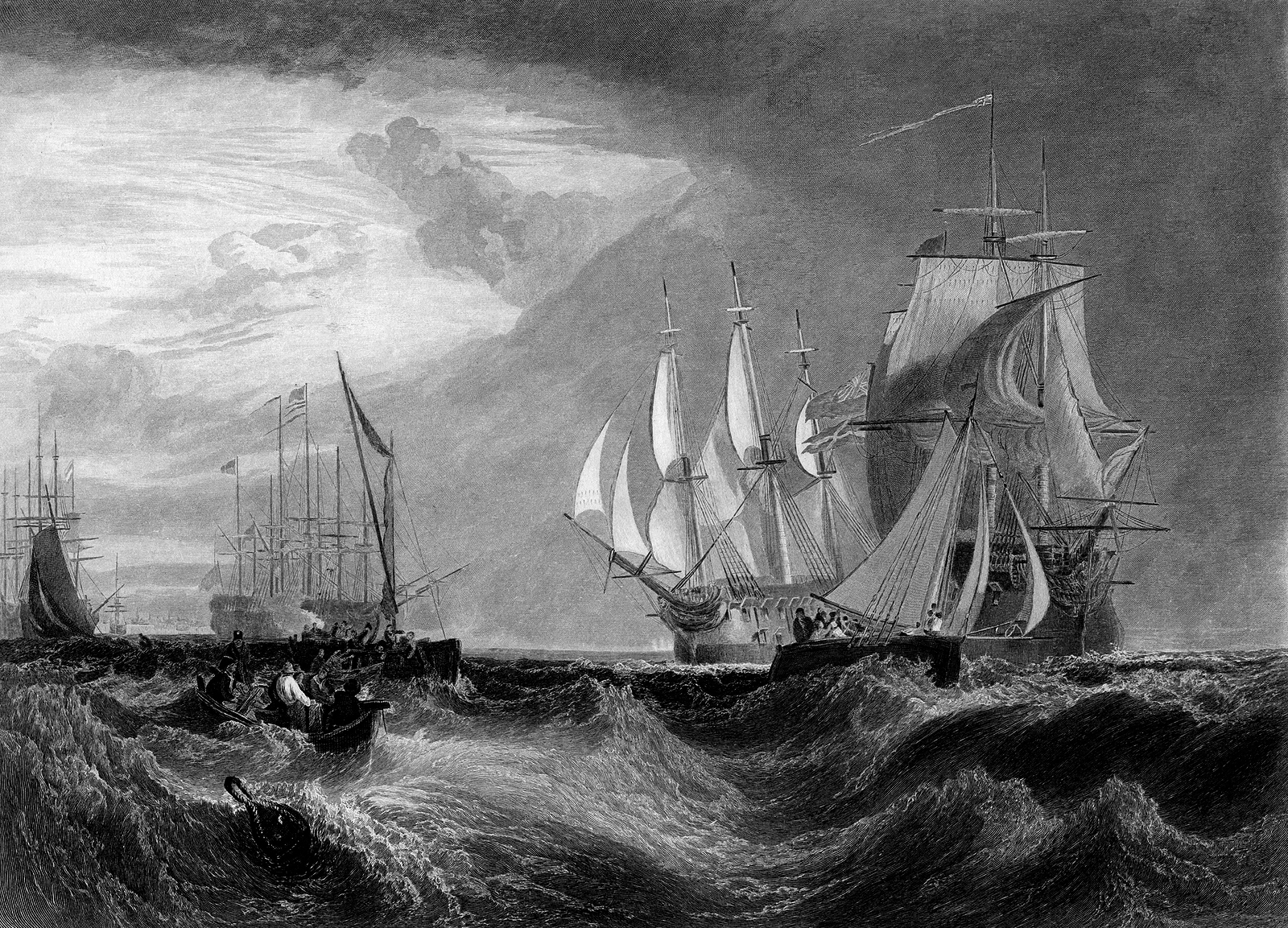
The Royal Fleet
Here’s an example of a real listing from the Navy List:
- Wallib, Sir P. W. P., Mid. of “Cleopatra” when captured by the French frigate ” Villede Milan,” after a long action, 1805; Lieutenant of “Curieux,” and cut out a vessel in St. Ann’s Bay, Guadeloupe ; subsequently wrecked, in “Curieux” on the enemy’s coast…
So now you have it, two list, the Baronetage and the Navy List. The Linked-in and Facebook of the day if you please. By having a character read one verses the other I’m giving you a hint as to where their values lie. The older establishment members of society clung to the Baronetage, while the up and coming youngsters liked to read the Navy List.
 1.10
1.10
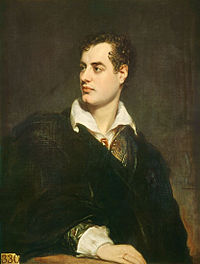
While at Uppercross my characters take a long November walk. Captain Wentworth is deep in conversation with the pretty Miss Musgroves, and pays no attention to Anne. Her goal, as usual, is not to be in any body’s way, and any pleasure she is to get from the walk “must arise from the exercise” and the beautiful autumn day which she describes as “the view of the last smiles of the year upon the tawny leaves and withered hedges.” You’ll forgive my gentle echos of the romantic poetry of Byron, Wordsworth and Scott, and the sonnets of Shakespeare. Anne is 27, and I wrote it when I was nearly 40, we are both in the Autumn of our lives — caution and reserve in love as young women has lead us to loneliness and regret as we’ve grown older — and it is particularly tender that we find solace from the beauty in a fall day, is it not?
1.11
The Literary Allusions really start sailing when the group travels to Lyme to visit Captain Wentworth’s friends Captain Harville and Captain Benwick. Benwick was to marry Harville’s sister Fanny but the young woman died while he was at sea. Benwick, heartbroken takes solace only in long walks along the cobb and in reading depressing poetry. Anne, no stranger to self punishment, joins him in conversation about literature as they discuss Sir Walter Scott’s “The Lady of the Lake” and his “Marmion: A Tale of Flooden Field”
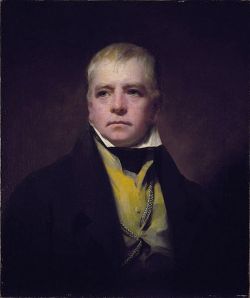 The Lady of the Lake is a narrative poem. Although it enjoys the same name of an Arthurian legioned it doesn’t share the same material as the Once and Future King.
“Marmion” tells how Lord Marmion lusts for the innocent Clara. Marmion conspires with Constance a fallen nun, to implicate Clara’s fiancé, Sir Ralph De Wilton, in treason. De Wilton looses a duel goes into exile. Clara takes refuge in a convent to escape Marmion’s advances. Constance is abandoned by Marmion and she ends up being walled – up – alive in the convent for breaking her vows. But she redeems herself by giving witness to De Wilton’s innocence. He returns and seeks his revenge at the Battle of Flooden Field. Marmion dies in the combat, while De Wilton displays heroism … regains his honor … retrieves his lands … and marries Clara!
Both poems are long and exciting, and were well known in in my circle, but “Marmion” has the added benefit of being about two lovers unjustly torn apart for years. Sound familiar?
So, Anne hopes to be of some use to her new friend by encouraging a “larger allowance of prose in his daily study.” She suggest works of the best moralists, … “calculated to rouse and fortify the mind.” … Then wonders ironically at her being able to preach patience and resignation when, after so many years of both, she is currently feeling very little of either.
1.12 The next day as their party is taking their last walk along the Cobb, Captain Benwick draws near Anne. When he says “Lord Byron’s ‘dark blue seas’ could not fail of being brought forward by their present view.” I’m alluding of course to Byron’s poem “Chile Harold’s Pilgrimage” …
He that has sailed upon the dark blue sea,
Has viewed at times, I ween, a full fair sight;
When the fresh breeze is fair as breeze may be,
The white sails set, the gallant frigate tight,
Masts, spires, and strand retiring to the right,
The glorious main expanding o’er the bow,
The convoy spread like wild swans in their flight,
The dullest sailer wearing bravely now,
So gaily curl the waves before each dashing prow.
… Anne and Benwick give their full attention to both poem and scenery until it is drawn away when Louisa is injured.
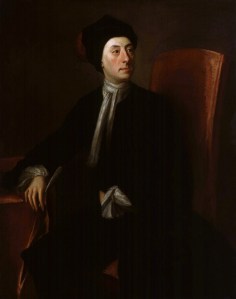
Mathew Prior
Anne attends to the invalid as others loose their heads. Anne, ever anxious to be of use, is ready to stay and nurse Louisa, who is now clearly Captain Wentworth’s favorite. The passage: “Without emulating the feelings of an Emma towards her Henry, she would have attended on Louisa with a zeal above the common claims of regard, for his sake…” refers to Matthew Prior’s “Henry and Emma” a ballad based on the much earlier “The Nut-Brown Maid.”
As Beauty’s Potent Queen, with ev’ry Grace
That once was Emma’s, has adorn’d Thy Face;
And as Her Son has to My Bosom dealt
That constant Flame, which faithful Henry felt:
2.3
In the second volume of the novel I move the action, alas, to Bath. Here my critical eyes are wide open and looking everywhere as I skewer society’s witless and vain. With the Elliots I find easy fodder. In Chapter Three Mr. Elliot, Anne’s Cousin, and heir to Kellynich Hall, pays a late night visit to the family at Camden-place. I neatly set the time of the visit with the phrase “The elegant little clock on the mantle-piece had stuck ‘eleven with its silver sounds” an allusion to Alexander Pope’s “The Rape of the Lock”.
Thrice rung the Bell, the Slipper knock’d the Ground,
And the press’d Watch return’d a silver Sound.
“The Rape of the Lock” is a mock-epic poem. Forgive me if I join Mr. Pope in lampooning Society. In Bath one must fine one’s sources of amusement where one can.
2.8
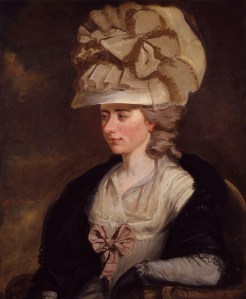 It comes to pass that Captain Wentworth also winds up in Bath. When Anne, her family and Frederick all show up at the same concert Anne attempts to get a seat that will let her both keep an eye on the Captain and allow herself to be seen by him. “She could not do so, without comparing herself with Miss Larolles, the inimitable Miss Larolles …” is a reference to a character from Fanny Burney’s 1782 novel “Cecilia.” There is some synergy between the books as both Anne and Cecilia have a parent obsessed with social rank center, and both their families live beyond their means. Miss Larolles, a member of the Ton, takes measures to explain the best place sit at the opera if one is to enjoy oneself.
“Do you know” says Miss Larolles “Mr Meadows has not spoke one word to me all the evening, though I am sure he saw me, for I sat at the outside on purpose to speak to a person or two that I knew would be strolling about; for if one sits on the inside there’s no speaking to a creature; you know so I never do it at the opera… It’s the shockingest thing you can conceive, to be made sit in the middle of these forms one might as well be at home for nobody can speak to one.”
I just adored “Cecilia.” I mention it in both Persuasion and Northanger Abbey, and even borrowed the title of Pride and Prejudice from a passage near the end of the novel.
2.11
The final Literary Allusion in Persuasion is to The Thousand and One Arabian Nights. Anne’s friend, Mrs. Smith, has informed her of Mr. Elliot’s true nature, but she must wait before she reveals it. “Her faith was plighted, and Mr. Elliot’s character, like the Sultaness Scheherazade’s head, must live another day.” Scheherazade, of course, kept her head by telling a new story to the Sultan every night. Thus both The Thousand and One Arabian Night and Persuasion are stories of deferral, with Anne’s taking seven years to come to fruition.
In the end the Sultan was so entranced with Scheherazade that he did not kill her…
“… His mind had become softened, and he was convinced of the great merit and good sense of the Sultana Scheherazade. He well recollected the courage with which she voluntarily exposed herself to destruction, in becoming his queen.”
He had become very much PERSUADED, indeed.
If in some small measure I have managed to illuminate the great works that have influenced me I will be most pleased. And I hope that the next time you lift the pages of this novel you will discover the hidden gems in my beloved Persuasion.










 ritaLOVEStoWRITE